


Introduction
During the colder parts of the year, heating is critical to greenhouse production, as it is essential for achieving the prescribed optimum temperature for crop growth (Sethi et al., 2013;Rasheed et al., 2018b). Thus, when designing a greenhouse, careful selection of appropriate material can positively affect the energy requirements and fuel consumption necessary to maintain optimal growth temperatures (Ponce et al., 2014;Marshall, 2016;Rasheed et al., 2018a)
The effort to support a growing energy demand, while simultaneously reducing fossil fuel impacts on the environment, has motivated the scientific community to invest significant time, money, and resources into extensively investigating the application of renewable energy (Adaramola, 2012). As part of that effort, numerous studies have focused on alternative ways to achieve greenhouse heating (Pucar, 2002;Kürklü and Bilgin, 2004;Ghosal and Tiwari, 2006;Abdel-Ghany and Al-Helal, 2011;Joudi and Farhan, 2014). The aim of these studies was minimize greenhouse energy intake by using alternative approaches, such as: increasing shortwave radiation availability inside the green house, reducing energy loss to the outside environment, and increasing the greenhouse’s constituent storage ability.
Thermal screens are commonly used in greenhouses to minimize heat loss at night during the winter and to provide adequate shading during the summer (Shukla et al., 2008). Accurate measurement of the screen’s longwave radiometric properties are important for selecting an appropriate screen to maintain optimal environmental conditions for plants during the night (Rafiq et al., 2019). These properties can be input into a physical model and used to calculate the amount of saved energy for different screens, thereby permitting a performance comparison between the different screen options.
Spectrophotometers, infrared sensors, and many other instruments are appropriate and available for measuring the properties of simple materials. However, the screen’s perforated nature and compositional complexity makes it impractical to use these instruments for accurately measuring the absorbed and emitted radiation (Abdel-Ghany et al., 2015a). To date, no standard technique is available for measuring the screens’ long-wave properties that can be applied to a diverse array of material types.
This study describes an experimental procedure for determining absorptive and emissive power along with reflectivity, transmissivity and emissivity of energy-saving greenhouse screens. Our method uses simple radiation balance equations and inexpensive radiometers in contrast to complicated procedures and costly scientific equipment. The results of our calculations allow researchers and growers alike to determine whether a material is a good heat insulator or conductor under natural environmental conditions. Such information permits comparison of energy performance between different screens and equips growers with necessary information to make an informed investment choice.
Materials and Methods
1. Material properties and composition
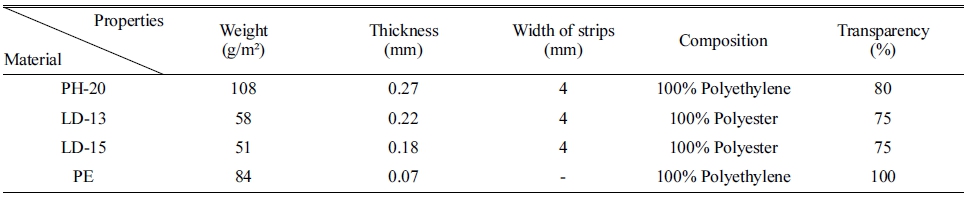
To carry out this experiment, four symmetric materials (identical on both sides) of the same category but with different compositions were selected and tested. The tested materials’ properties and nature are presented in Table 1. PhormiTex PHL 20 (PH-20) is an energy saving gable screen. Luxous-1547 D FR (LD-15) combines good heat retaining properties with high light diffusion and transmission. The diffusion brings light to the plants from various directions, reducing overheating of upper areas. The main function of Luxous-1347 D FR (LD-13) is saving energy through maximum light transmission. Polyethylene( PE) is primarily plastic film that is preferred by most agricultural growers due to its affordability, flexibility, and easy manufacturing. In this study, polyethylene was used as a standard reference material due to its well-known properties, which are widely reported in the literature. The material, which is transparent and partially porous, was tested to confirm the accuracy of results obtained by our proposed method.
2. Experimental setup
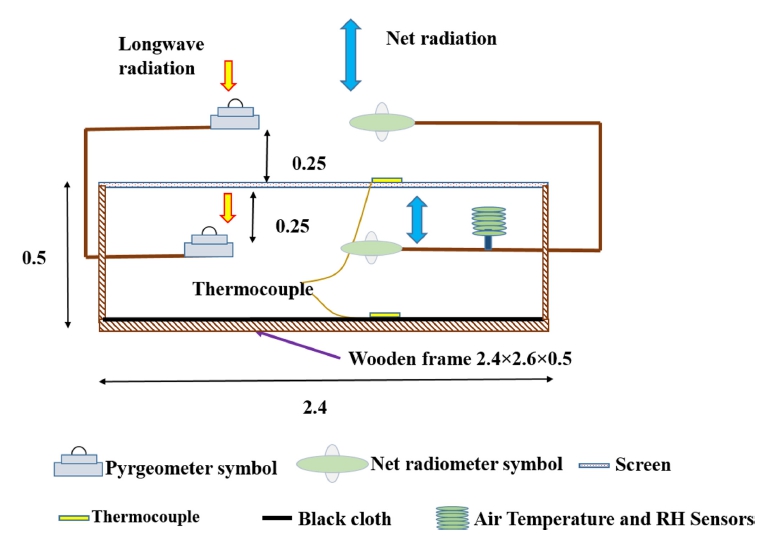
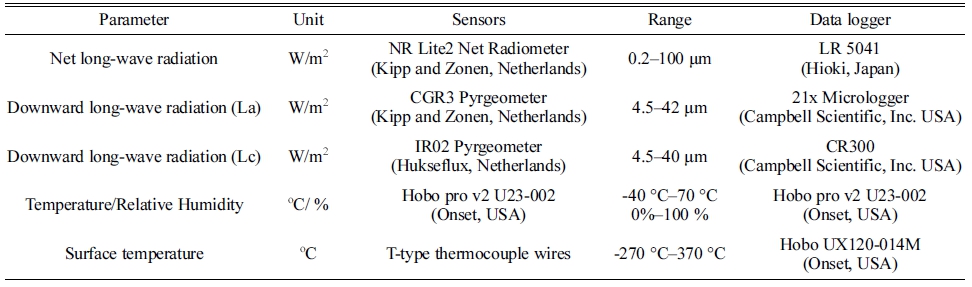
This experiment was conducted on a building roof in order to obtain clear sky radiations. A hollow wooden frame was built, the bottom of which was covered with a black cloth of known radiometric properties (τb = 0, ρb = 0.07, εb = 0.93). The frame measurements were 2.4W × 2.6L × 0.5H m, and the 3D structure enclosed by the frame had a total volume of 3.12m3. Fig. 1 depicts the frame dimensions and the equipment positions. One night is required to examine one sample screen and each material was tested from 18:00 to 6:00 o’clock. Downward longwave radiation (La & Lc) was measured with a pyrgeometer, while upward fluxes (Lb & Ld) were computed from the difference between net radiometer and the downward fluxes. Two thermocouple wires, with a very thin diameter, were used to measure the black cloth’s surface temperature. All measured parameters were recorded at 10- minute intervals and saved in each parameter’s corresponding data logger. Table 2 depicts the list of employed equipment and data loggers.
3. Theory
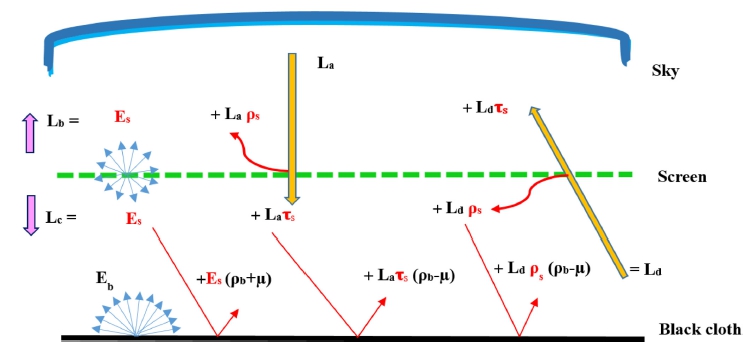
The outgoing long-wave radiation equation above the screen surface (Lb) for symmetric materials is given below, where Lb is in W/m2.
| $${\mathrm L}_{\mathrm b}={\mathrm E}_{\mathrm s}+{\mathrm\rho}_{\mathrm s}{\mathrm L}_{\mathrm a}+{\mathrm\tau}_{\mathrm s}{\mathrm L}_{\mathrm d}$$ | (1) |
| $${\mathrm L}_{\mathrm c}={\mathrm E}_{\mathrm s}+{\mathrm\tau}_{\mathrm s}{\mathrm L}_{\mathrm a}+{\mathrm\rho}_{\mathrm s}{\mathrm L}_{\mathrm d}$$ | (2) |
where ρs is the screen reflectance, Es is the screen’s emissive power in W/m2, τs is the screen’s transmittance, and La is the downward sky radiation in W/m2.
The outgoing long-wave radiation equation over the black surface (Lc) and below the screen surface for symmetric materials is given below, where Lc is in W/m2.
The reflected portion of incoming long-wave radiation toward the screen, above the black cloth (Ld), depends upon the screen’s physical condition. The incoming radiation (Ld) of transparent and semitransparent materials or materials with partial porosities is given below, where Ld is in W/m2.
Where ρb is the black cloth’s reflectance. Eb is the black cloth’s emissive power in W/m2, which was determined by Stefan-Boltzmann's law. The emissive power of black can also be calculated using the following equations:
| $${\mathrm E}_{\mathrm b}=({\mathrm L}_{\mathrm d}-{\mathrm L}_{\mathrm c}\ast\;{\mathrm\rho}_{\mathrm b})$$ | (4) |
| $${\mathrm E}_{\mathrm b}=({\mathrm L}_{\mathrm d}\ast\;{\mathrm\varepsilon}_{\mathrm b})$$ | (5) |
In the aforementioned equation (3), reflection of all three components (Es, ρs Ld, and τs La) from the black cloth’s surface are considered because τs La will reach the black cloth’s surface, either from porosity or the presence of transparent material in the sample’s composition; and ρs Ld will reach the black cloth’s surface due to the presence of opaque material, e.g., thread. Using the iteration method in Matlab to simultaneously solve the three equations (1, 2 and 3) results in equation (3) causing compatibility issues, even though the number of equations equals the number of unknowns. In order to make these equations compatible to solve simultaneously, micro (μ) =10^-6, is subtracted from the reflected portion of τs La and ρs Ld, and added into the reflected portion of Es in equation (3). μ is the smallest assumed number that can act as tolerance for the black cloth’s reflectance (ρb). It has no significant effect on the value, but it helps to circumvent the equations’ compatibility issue. Subtraction and addition is based on the radiation strength.
The multiple reflections (i.e., ρs2, ρs3 and ρb2, ρb3) of thermal radiation between the screen and the black cloth were ignored. No angular interaction between the sample materials and the incident radiation was considered. The absorbed longwave radiation by screen (As) can be calculated as:
| $${\mathrm A}_{\mathrm s}={\mathrm\alpha}_{\mathrm s}\ast({\mathrm L}_{\mathrm a}+{\mathrm L}_{\mathrm d})$$ | (6) |
Where αs is the screen’s absorption.
4. Transparency measurement
Transparency is defined as the ratio between the nonopaque portion and the total area of a sample’s materials. Its measurement is important because it can aid in selecting a suitable pair of equations for the radiative properties’ measurement. In this study, the image processing method was used, as it is both fast and accurate. ImageJ software was employed for processing the images, which is a freely accessible source Java image processing program inspired by NIH Image that can compute the area and pixel value statistics of user-defined selections. Furthermore, it can measure distances and angles. For image processing, the first screens were tacked to a small frame (4 cm × 4 cm) and scanned at 300 dpi resolution with a flatbed scanner (Scanjet 5550c, HP, USA). Scanned images were then converted to black-and-white images by changing the image type to 8-bit and using a bandpass filter. Set scale command was used to adjust the image scale. These steps are essential for real and accurate measurement of the area. Final steps included thresholding and particle analysis of non-opaque areas in the images. After the measurement of empty area, an excel sheet was used to estimate the final value of the materials’ transparency. Fig. 2
Results and Discussion
This experiment was conducted under dry and clear sky conditions. Environmental parameters - i.e., air temperature and relative humidity - were also recorded, as previous studies (Cohen and Fuchs, 1999;Abdel-Ghany and Al- Helal, 2012) reported the effect of these parameters on experimental results. Temperature of surrounding air of sample materials was shown in Fig. 3. Highest difference between maximum and minimum value of temperature was recorded for LD-15 and PE which was more than 8°C. Lowest temperature variation was recorded for LD-13 which was about 6.2°C. Fig. 4 clearly depicts that relative humidity gradually increases as night progresses. Even though air temperature and relative humidity varied significantly but these factors showed no impact on the properties.
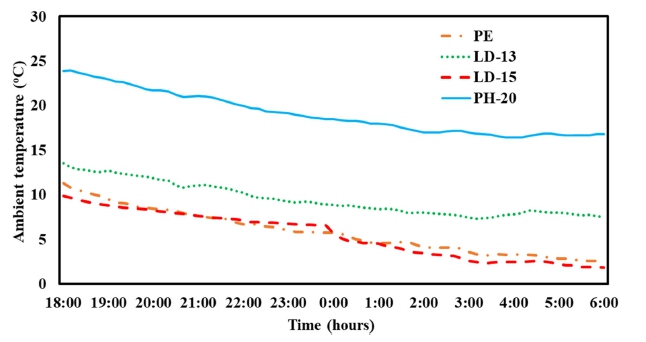
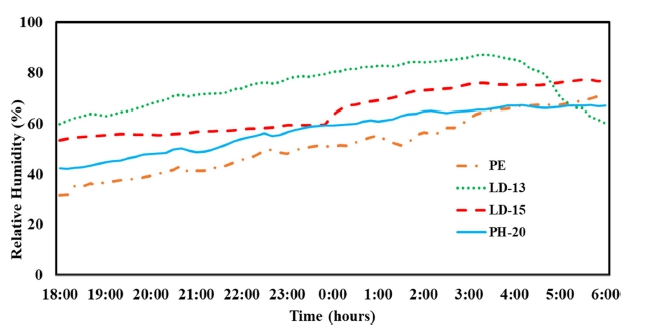
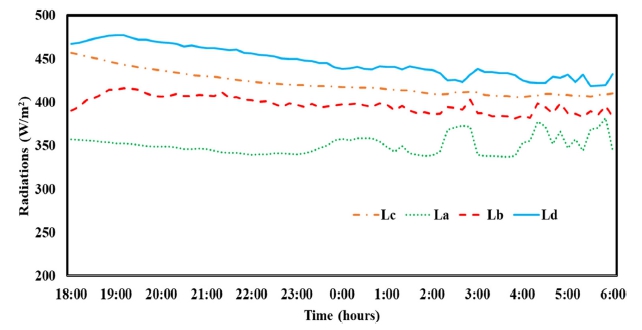
Fig. 5 demonstrates the incoming and outgoing radiations of PH-20. Downward radiations were directly measured by a pyrgeometer and upward radiations were calculated using a procedure reported in (Blonquist Jr et al., 2009).
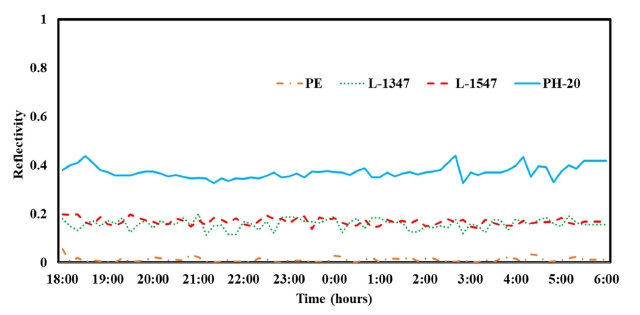
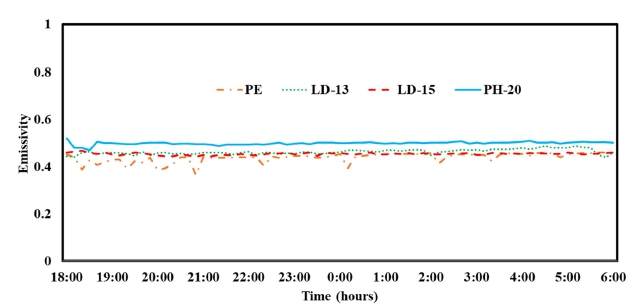
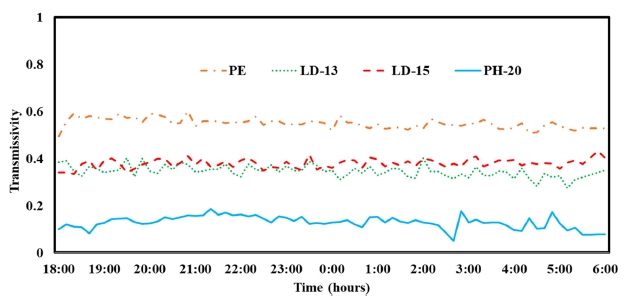
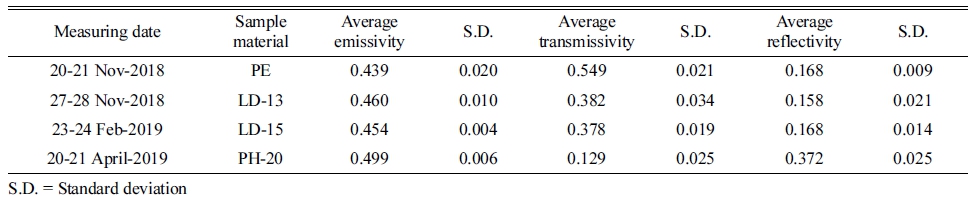
Comparison of the tested samples’ reflectivity, emissivity, and transmissivity are presented in Figs. 6-8, respectively. PH-20 showed a high reflectance as compared to the other materials. Such materials can reduce temperatures by 1-7°C, as reported by (Hernández-Pérez et al., 2014). PE results are in good agreement with the values reported by (Gentle et al., 2013). LD-13 and LD-15 have the same structure, but they differ in that LD-13 has shiny surface. Interestingly, both materials exhibited very similar longwave radiative properties - value differences did not exceed 2-3% - even though the surfaces had different lusters. All the materials displayed similar emissivity values, except PH-20, which showed 5-6% more emittance than the other materials. Further, the comparison of the average values of radiometric properties with standard deviation is shown in Table 3. Fig. 7
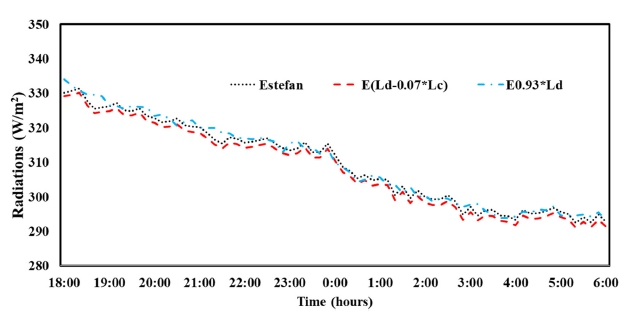
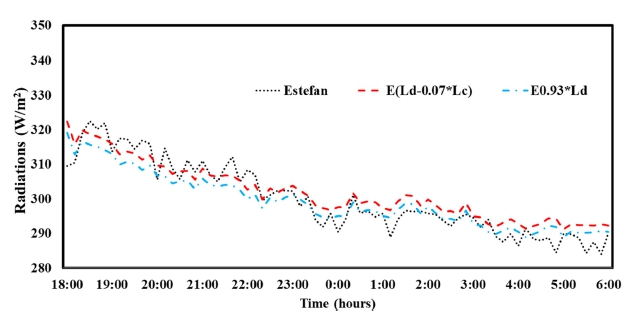
Emitted radiation of any material is usually measured with the Stefan Boltzmann equation, but in this experiment, the black cloth’s emissive power was measured via three methods. First method is based on the famous Stefan Boltzmann equation, which requires surface temperature and emissivity values. The other two methods are specially designed, based on a similar setup to what was used in this study. The second method’s output is simply acquired by multiplying incoming radiations (Ld) with 0.93; and the last method is based on radiation balance equation (4). Figs. 9- 10 illustrate the black cloth’s emissive power for two tested sample screens. Note that the values obtained using newly described methods are very close to the actual measurement by the Stefan Boltzmann equation.
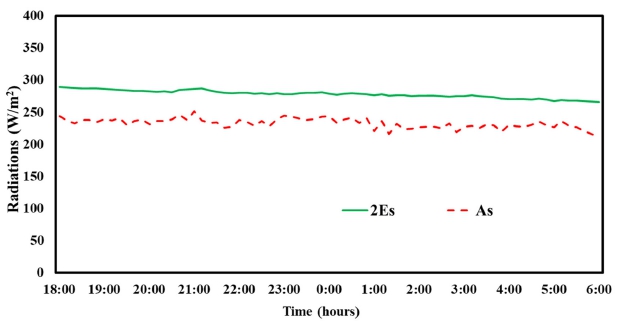
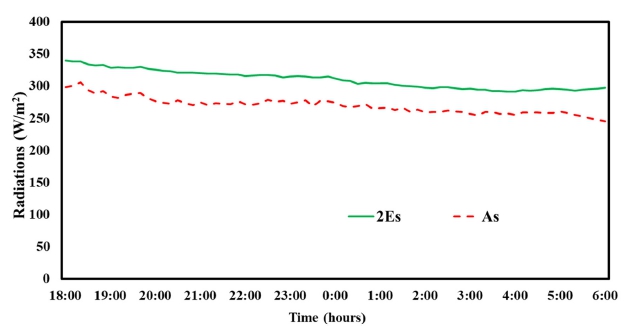
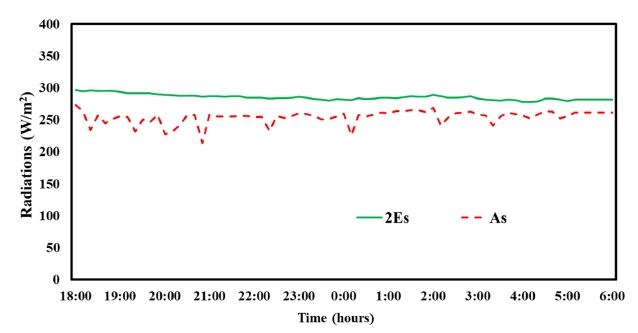
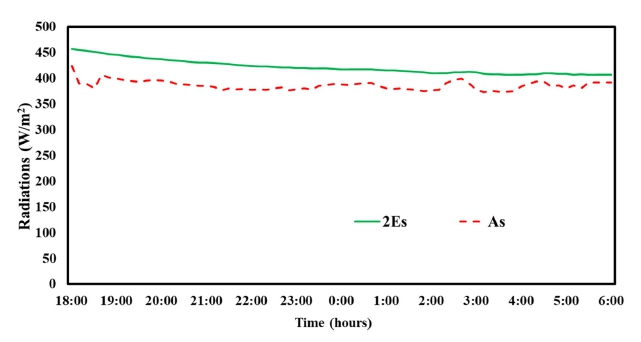
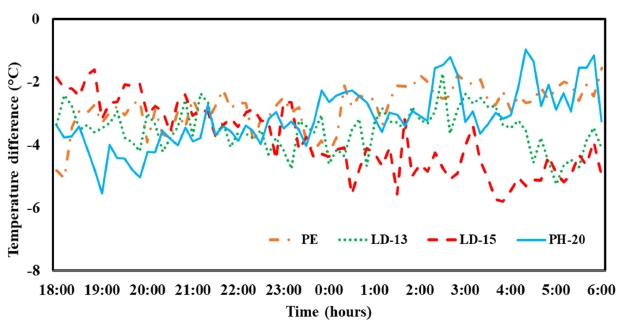
Figs. 11-14 present the absorbed and emitted radiation results from the tested sample materials. These figures clearly show that emitted radiation (2E) was always greater than absorbed radiation for all the materials. Similar findings were reported by Abdel-Ghany et al., 2015b, despite the fact that they used different materials and different cal- culation methodology. Emitted radiation primarily depends on the material’s absolute temperature and emissivity. Sample materials were also exposed to sunlight for an entire day, prior to the actual experiment start time. This received energy would be released from the materials during the night, as longwave radiation. In contrast, absorbed radiation predominantly relies on sky radiation (La), radiation coming from black cloth (Ld), and absorptivity and angle of incident radiation. Another factor in this setup that can add or subtract energy to/from the material is convective exchange. In order to clarify the effect of energy exchange between the air and materials, the temperature difference was measured and recoded. Results are shown in Fig. 15. This diagram demonstrates that ambient temperature was always higher than the screen materials’ surface temperature. Higher screen and film temperature is clear evidence of energy flow from air to materials. Figs. 12, 13
Conclusion
Experiment was conducted during night time to investigate the material’s potential to conserve energy. Radiation balance method was applied in order to get the absorptive and emissive power along with reflectivity, transmissivity and emissivity of energy-saving greenhouse screens by using wide band radiometer. The ability of materials to save energy is dependent on these properties. Based on the results we concluded that PH-20 has greater potential to conserve as it has high reflectance and better absorptive power as compared to other sample materials. Other three tested materials have same potential to absorb energy. LD- 13 and LD-15 showed similar properties so they can save energy with equal capacity but less than that of PH-20. The result of PE showed results opposite to PH-20 as it exhibited nearly zero reflectance and high transmission value. Surly, PE will radiate more energy due to high transmissivity among the tested materials.