


Introduction
Silicon (Si) is the second most abundant element both on the surface of the Earth’s crust and in soils. Although Si has not been listed among the essential elements for higher plants but the beneficial role of Si in stimulating the growth and development of many plant species has been generally recognized (Epstein, 1999; Liang, 1999; Ma et al., 2001; Liang et al., 2005). Silicon is known to effectively mitigate various abiotic stresses such as heavy metal toxicities (Liang et al., 2001, 2005), and salinity (Liang, 1999; Romero-Aranda et al., 2006; Abou-Baker et al., 2011), drought (Gong et al., 2003; Trenholm et al., 2004), heat (Agarie et al., 1998), and freezing stresses (Liang et al., 2008).
Tomato seedling quality is highly valued in Korea vegetable production. Ideally, seedlings are transplanted to the field when they reach the correct size, but seedlings are often ready before farmers can transplant them. In that case, the growth of seedlings should be slowed or delayed by low temperature storage (Vu et al., 2015). The objective of low temperature storage is to achieve conditions that suppress growth and development without causing damage to the seedling. Aroca et al. (2011) categorized that low temperature treatment was between 0°C and 15°C. Also, it was reported that tomato plants could be maintained without growth when they were stored below 12°C (Criddle et al., 1997). However, extended storage of tomato seedling under such low temperature can cause chilling injury, which can result in adverse effects on photosynthesis, respiration, membrane integrity, water relations, and hormone balance (Graham and Patterson, 1982) or, in the worst scenario , seedlings could die (Bruggeman et al., 1992). Therefore, it would be of interest to find appropriate methods to improve tomato seedling quality under low temperature storage.
In this study, we examined whether the application of silicate fertilizer has positive effects on seedling growth by determining effective concentration and application number of soil drenching. Also, it was examined whether silicate treatment can maintain the quality of tomato seedlings under low temperature storage.
Materials and Methods
1. Plant material and growing conditions
Seeds of ‘Rapito’ tomato variety were sown in the 128-cell plug trays (Bumnong. Co., Ltd., Jeongeup, Korea) that had been filled with commercial growing substrate (BM2, Berger Group Ltd., Quebec, Canada). One week after sowing, seedlings were fertilized twice a week with Wonder Grow fertilizers (Wonder Grow, Chobi Co., Ltd., Seoul, Korea). Twenty days after sowing, the seedlings with 2-3 true leaves were transplanted to 32-cell plug trays. Ten days later, the seedlings were used for the experiment, which was carried out in a plastic house.
2. Silicate fertilizer application and low temperature treatment
To examine the effect of silicate treatment on growth, the 30-day old seedlings were treated with six different concentrations (8, 16, 32, 64, 128, and 256mM) of ‘Keunson’ silicate acid fertilizer (Saturn Bio Tech Co., Korea) or running water as the control twice a week for 20 days. After the end of last treatment, the growth characteristics of the seedlings were evaluated.
To examine the effect of the number of silicate applications on tomato seedling growth characteristic, relative ion leakage, and chilling injury were investigated. The tomato total fifty seedlings were drenched with water as the control or with 16 mM of silicate fertilizer daily (20 times), once in two days (10 times), once in three days (6 times in total) for 20 days. Then the seedlings were placed in a growth chamber at 7±1°C and 10±1°C for 20 days. The growth chamber was set to the day/night cycle of 12h/12h, 40-50% relative humidity, and the light intensity of 30 mmol·m-2·s-1 with fluorescent light.
3. Data collection and analysis
The plant height, number of leaves, stem diameter, leaf length and width of seedlings were measured. Leaf area measured by leaf area was meter (Delta-T Device Ltd., Burwell, Cambridge, UK), and leaf chlorophyll content was measured by using a chlorophyll meter (SPAD-502 Plus, Konica Minolta Sensing Inc., Osaka, Japan). To measured dry weight, shoots and roots were dried in drying oven at 80°C for 72 hrs. T/R ratio (shoot dry weight/root dry weight ratio) and compactness (shoot dry weight/stem length) was calculated according to Kim et al. (2008). The root morphology was measured using the WinRHIZO Pro 2009c (Regent Instruments, Inc, Quebec, Canada) images analysis system coupled with professional scanner Epson 10000XL (Seiko Epson Corporation, Nagano, Japan). The roots were detached from their shoots and then placed in a tray (15 × 30 × 2cm) with water and placed on the scanner. Scanned images were analyzed by the WinRHIZO program for total root surface area, total root length, average root diameter, and number of root tips.
The stomatal diffusive resistance, transpiration, and leaf temperature of tomato seedlings were assessed with an LI- 1600, steady state porometer (LIP) (LI-COR, Lincoln, Nebraska, USA) for 4th leaf from the top of 10 plants of each treatment.
The low temperature injury index was classified into the following six points: 0 for non-low temperature injury; 1 for 0-20%; 2 for 21-40%; 3 for 41-60%; 4 for 61-80%; and 5 for 81-100% of leaf area damage. Relative ion leakage was also assessed by the leakage of electrolytes from the leaves of ten plants of similar size. Leakage of electrolytes was determined using conductivity meter (SevenEasy, Mettler Toledo AG 8603, Switzerland). The leaf segments (disks of leaves with d = 1cm2) were strictly washed, blotted dry, weighted and put in vials filled with the exact volume of deionized water. The vials were incubated for 2 hours in darkness with continuous shaking and then conduction (C1) was measured. The vials were heated at 80°C for 2 hours and the conduction (C2) was measured again. The electrolyte leakage was expressed as the percentage of relative ion leakage, which was calculated according to the following equation: Relative electrolyte leakage (%) = C1/C2 × 100(Zhao et al., 2007).
The experiments were arranged in completely randomized design. For the statistical analysis of growth and physiology parameters, ten seedlings per treatment were randomly selected. The data were analyzed using SAS v.9.3 software (SAS Institute Inc., Cary, NC, USA). The mean separations were calculated using Duncan’s multiple range tests at P0.05.
Results
1. Effect of silicate concentrations on tomato seedling growth
Compared to the control, the plant height was increased of 31% significantly with application of 16mM silicate fertilizer; however, it was decreased of 28% at both 128 and 256mM.. While the stem diameter was not statically different among the seedlings treated with 8, 16, 32, and 64mM of silicate fertilizer, it decreased at both with 128 and 256mM. The leaf number was increased under the 8, 16, and 32mM treatments, while it was decreased under the 256mM treatment. The leaf chlorophyll content was higher under all treatments compared to that of the control. The highest value of leaf area was observed in the seedling treated with 16mM silicate concentration. There was no significant difference in the leaf length and width under thecontrol, 8, 16, 32, 64, and 128 mM treatments. High concentration of silicate fertilizer resulted in reduction in most growth characteristics (Fig. 1, Table 1).
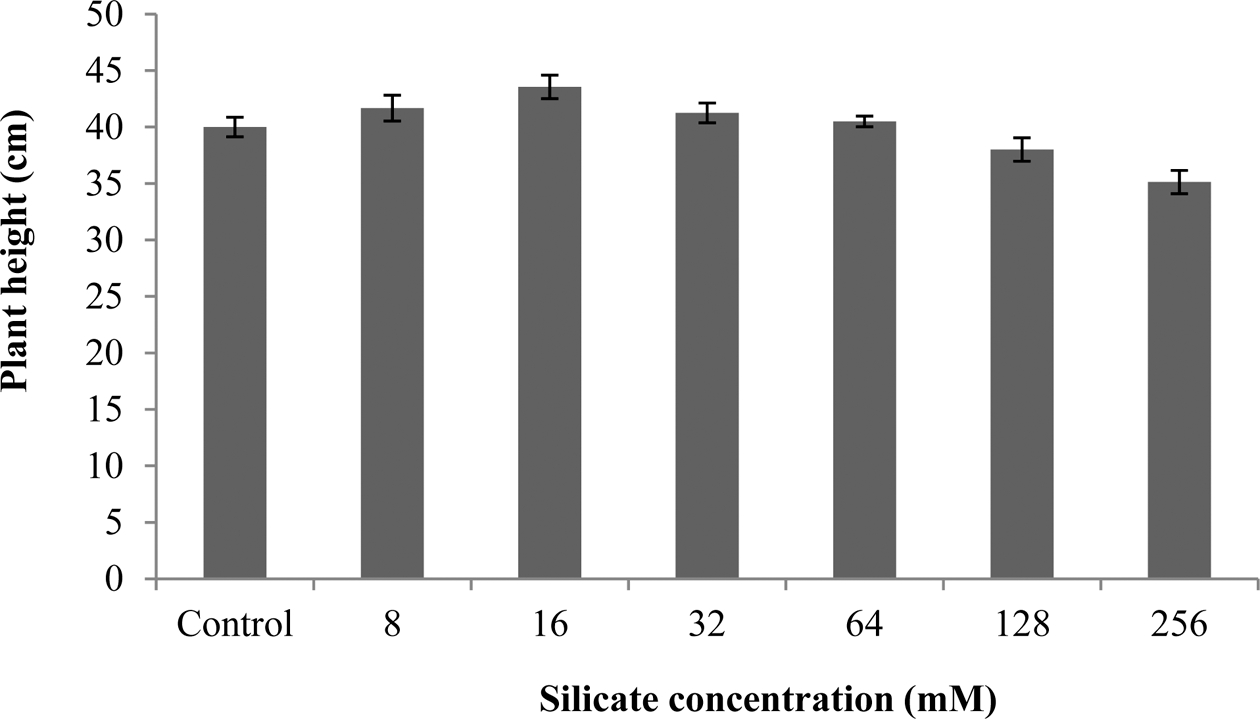
Table 1. Changes of plant growth parameters as affected with different silicate concentrations.
| Silicate concentration (mM) | Stem diameter (mm) | No. of leaves | Leaf chlorophyll (SPAD) | Leaf area (cm2) | Leaf length (cm) | Leaf width (cm) |
|---|---|---|---|---|---|---|
| 0 (Control) | 5.5 abz | 9.8 b | 36.4 b | 176.0 b | 17.9 a | 10.5 a |
| 8 | 5.7 a | 10.5 ab | 37.3 ab | 177.8 b | 18.1 a | 11.0 a |
| 16 | 5.8 a | 11.0 a | 39.0 a | 186.8 a | 18.5 a | 11.1 a |
| 32 | 5.7 a | 10.5 ab | 40.4 a | 173.0 b | 18.0 a | 10.0 ab |
| 64 | 5.6 ab | 10.3 b | 37.6 ab | 174.0 b | 17.3 ab | 9.8 ab |
| 128 | 5.4 b | 10.0 b | 38.3 a | 163.8 c | 17.3 ab | 9.5 ab |
| 256 | 5.2 c | 9.3 c | 38.5 a | 158.8 c | 16.4 b | 9.0 b |
The highest fresh weight of both shoot and root was obtained with application of 16 mM silicate fertilizer, while fresh weight of both shoot and root decreased in the seedlings treated with both 128 and 256mM. Also, the highest dry weight in both shoot and root was observed in the seedlings treated with 16mM silicate fertilizer; however, the dry weight values of 128 and 256mM were not statistically different from those of the control. High concentrations of silicate fertilizer, 128 and 256mM, resulted in a decrease of dry weight of shoot and root. The ratio of top to root(T/R ratio) was increased in the seedlings treated with 16, 32, 64, 128, and 256mM silicate fertilizer. The seedlings treated with 8, 16, and 32mM silicate fertilizer exhibited a significantly higher compactness than those treated with other concentrations (Table 2).
Table 2. Effect of different silicate concentrations on fresh and dry weight of shoot and root, T/R, and compactness in tomato seedlings.
| Silicate concentration (mM) | Fresh weight (g) | Dry weight (g) | T/Rz ratio | Compact-nessy (mg.cm-1) | ||
|---|---|---|---|---|---|---|
| Shoot | Root | Shoot | Root | |||
| 0 (Control) | 15.09 bx | 1.38 b | 1.26 ab | 0.14 a | 8.74 b | 30.6 b |
| 8 | 16.45 a | 1.40 b | 1.27 ab | 0.14 a | 8.90 b | 31.4 ab |
| 16 | 16.75 a | 1.54 a | 1.39 a | 0.15 a | 9.58 a | 33.9 a |
| 32 | 16.04 a | 1.39 b | 1.26 ab | 0.14 a | 9.38 a | 31.6 ab |
| 64 | 15.22 b | 1.30 bc | 1.24 ab | 0.12 b | 9.02 a | 30.3 b |
| 128 | 13.73 c | 1.20 c | 1.19 b | 0.12 b | 9.94 a | 30.3 b |
| 256 | 12.62 c | 1.19 c | 1.20 b | 0.11 b | 10.84 a | 30.2 b |
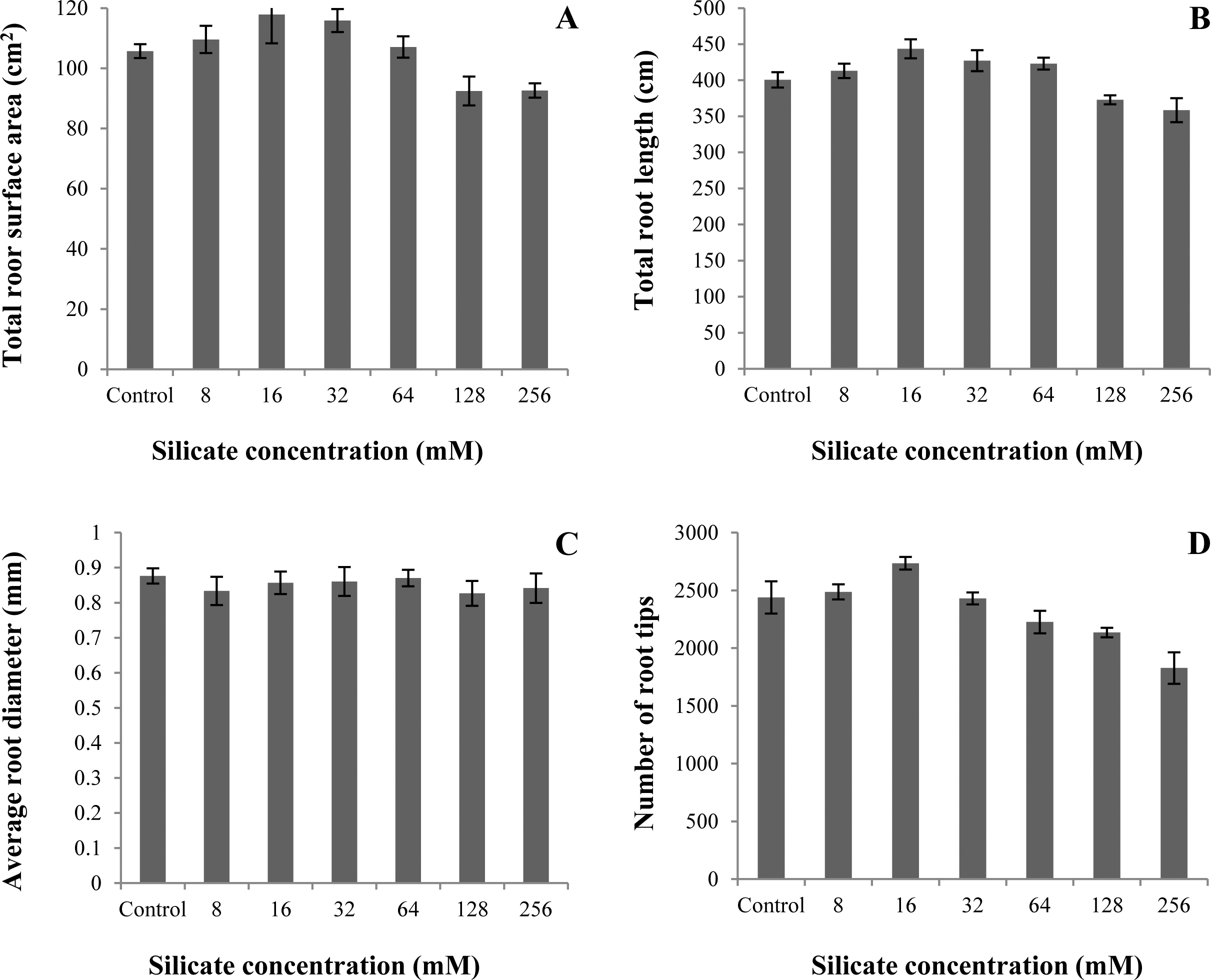
To examine root morphology, total surface area, total root length, root diameter, and number of root tips were measured from the seedlings treated with different concentrations of silicate fertilizer. The seedlings treated with 16 mM silicate fertilizer exhibited significantly higher total root surface area, total root length, and number of root tips as compared to those treated with other concentrations (Fig. 2). However, root diameter was not affected by all tested concentrations of silicate fertilizer.
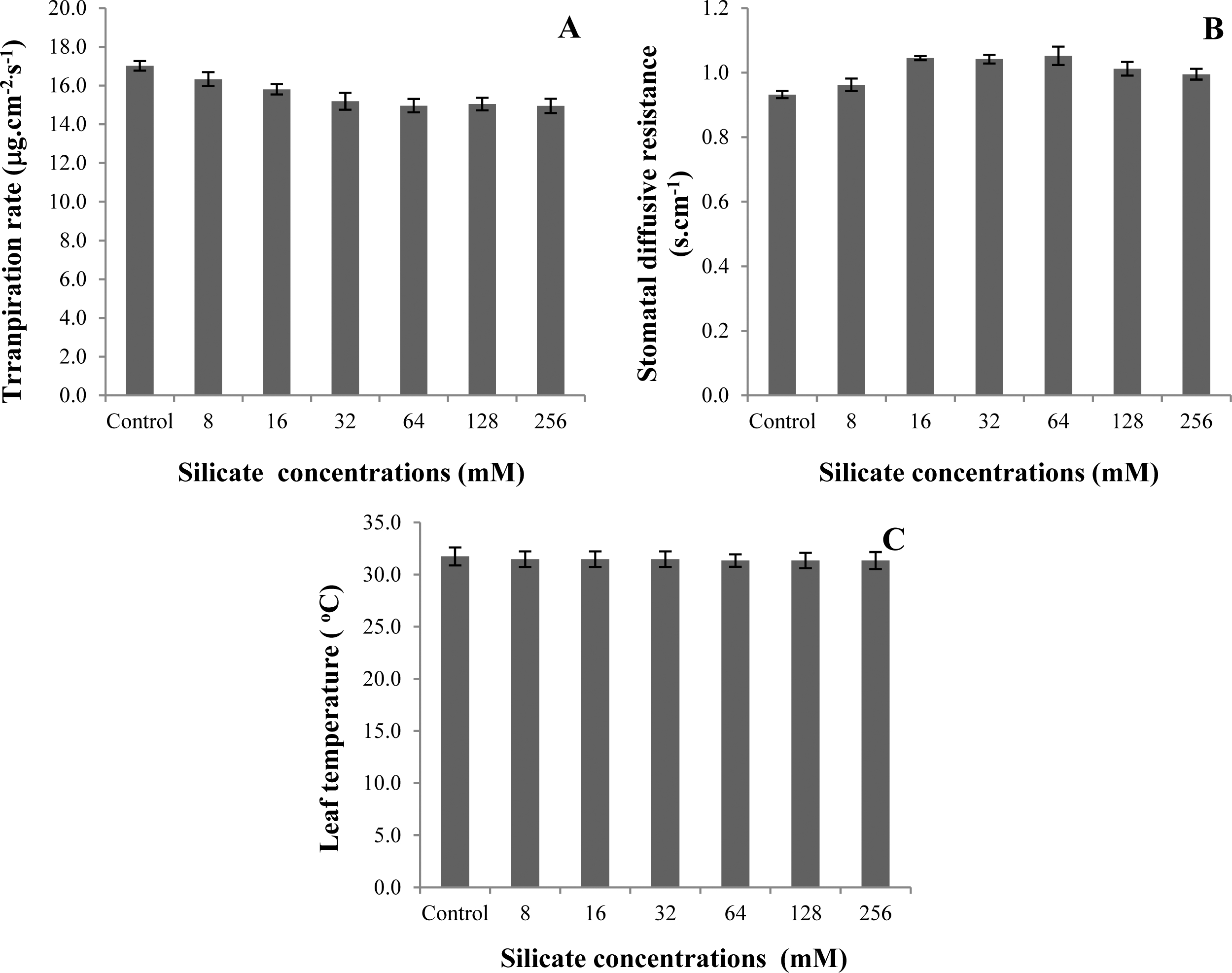
While the transpiration rate of the seedlings decreased with the increase of silicate concentrations up to 32mM, no further reduction was observed in the seedlings treated with concentrations over 32mM of silicate fertilizer. On the other hand, stomatal diffusive resistance exhibited the highest increase in 16mM silicate treatment, but further increase was not observed in the silicate concentrations over 16mM. Leaf temperature did not exhibit any significant difference among the treatments (Fig. 3).
2. Effect of silicate treatment number on growth, relative ion leakage, and low temperature injury of tomato seedlings
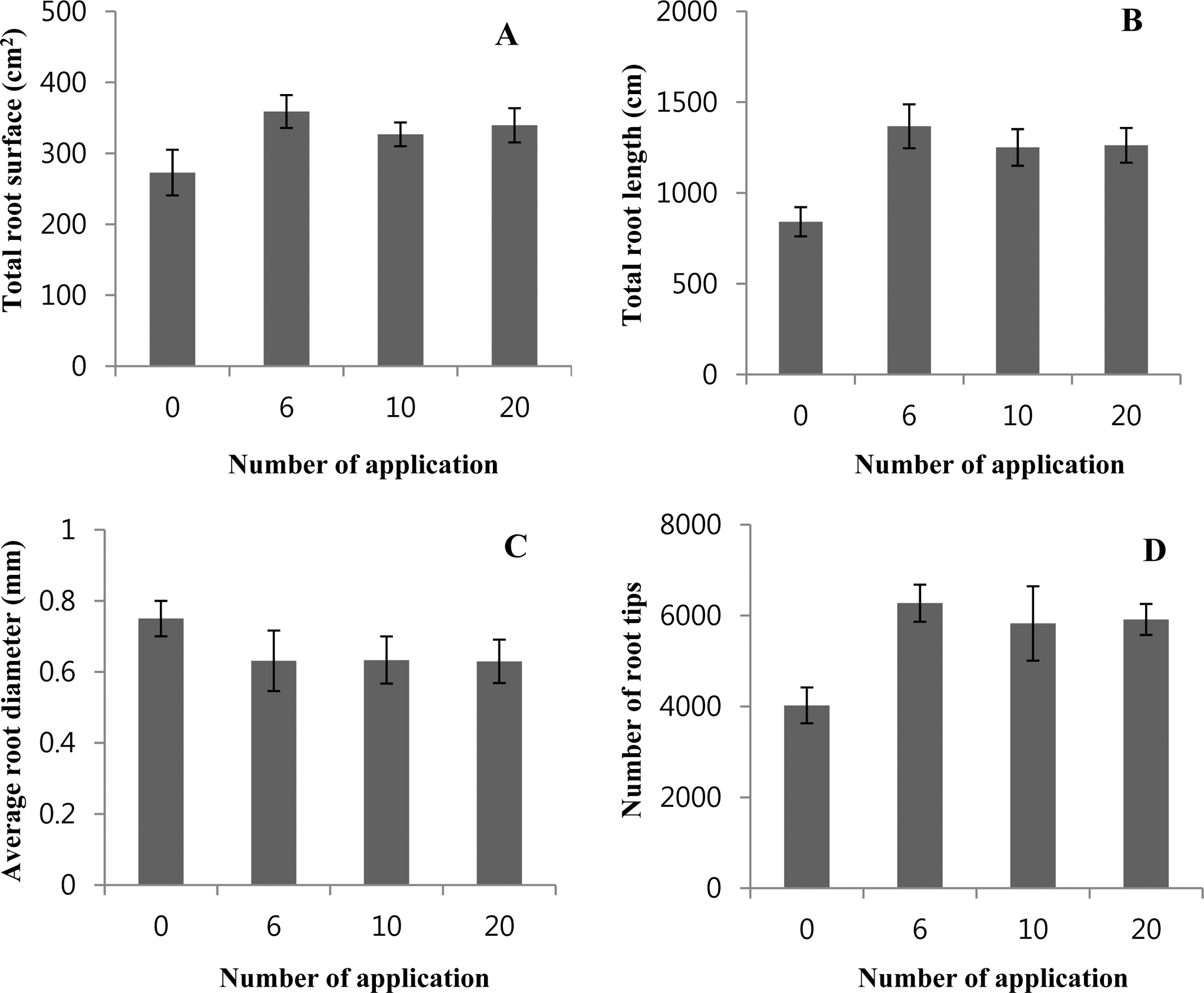
To examine the effect of the application number of silicate fertilizer on seedling growth, the seedlings were treated with 16mM silicate fertilizer by 6, 10, or 20 times for 20 days. While the height and leaf area significantly increased in all tests, stem diameter, leaf number, chlorophyll content, leaf length, and leaf width did not exhibit any significant difference among the treatments as compared to the control (Table 3). Furthermore, silicate treatment increased fresh weight and dry weight of both shoot and root and T/R ratio (Table 4). The seedlings treated with silicate fertilizer showed a significantly higher compactness than those without treatment (Tables 3-4 and Fig. 4).
Table 3. Changes of plant growth parameters as affected with different silicate treatment number concentrations.
| Number of application | Plant height (cm) | Stem diameter (mm) | No. of leaves | Leaf chlorophyll (SPAD) | Leaf area (cm2) | Leaf length (cm) | Leaf width (cm) |
|---|---|---|---|---|---|---|---|
| 0 | 28.0bz | 4.89 a | 12.1 a | 38.6 a | 172.9 b | 10.1 a | 7.1 a |
| 6 | 32.6 a | 5.12 a | 12.5 a | 39.8 a | 194.1 a | 10.7 a | 7.3 a |
| 10 | 32.6 a | 5.05 a | 12.8 a | 39.8 a | 187.4 a | 10.4 a | 7.4 a |
| 20 | 32.2 a | 5.07 a | 12.3 a | 40.7 a | 186.3 a | 10.3 a | 7.2 a |
Table 4. Effect of different silicate treatment number on fresh and dry weight of shoot and root, T/R, and compactness in tomato seedlings.
| Number of application | Fresh weight (g) | Dry weight (g) | T/Rz ratio | Compactnessy (mg.cm-1) | ||
|---|---|---|---|---|---|---|
| Shoot | Root | Shoot | Root | |||
| 0 | 12.78 bx | 2.57 b | 1.42 b | 0.27 b | 5.21 a | 50.5 b |
| 6 | 14.24 a | 3.06 a | 1.65 a | 0.32 a | 4.71 b | 56.5 a |
| 10 | 14.75 a | 2.86 a | 1.65 a | 0.33 a | 5.16 a | 55.0 a |
| 20 | 14.46 a | 2.80 a | 1.63 a | 0.31a | 5.14 a | 52.6 b |
Plant height of the tomato seedlings under low temperature storage at 7±1°C was smaller than those at 10±1°C in both silicate and non-silicate treatments; however, the number of leaves was not significantly different between both temperatures. Promotion of shoot growth was enhanced in the seedlings treated with silicate fertilizer in both low-temperature storages as compared to those without silicate treatment. Leaf chlorophyll content of the tomato seedlings at 10±1°C in silicate treatments was higher than that in nonsilicate treatment. The time of expanding leaf increased with the increase of storage duration. However, the time of expanding leaf of the seedlings in silicate treatment was shorter than that in non-silicate treatment (Table 5).
Table 5. Effect of different silicate treatment number on the growth and low temperature injury in tomato seedlings at 7 and 10°C (6 application times).
| Treat-ments | Temp. (°C) | Duration (days) | Plant height (cm) | No of leaf | Leaf chlorophyll (SPAD) | Time of expanding leaf (days) | Low temperature injury indexz |
|---|---|---|---|---|---|---|---|
| Non-Silicate | 7 | 10 | 28.2±0.7 | 12.0±0.5 | 24.7±1.1 | 3.2±0.3 | 1.9±0.4 |
| 15 | 28.9±0.6 | 12.3±0.4 | 24.0±0.7 | 3.5±0.5 | 2.6±0.5 | ||
| 20 | 30.1±0.8 | 13.8±0.5 | 22.1±1.3 | 3.5±0.5 | 3.3±0.5 | ||
| 10 | 10 | 28.9±0.6 | 13.6±0.5 | 27.6±1.2 | 2.1±0.3 | 1.0±0.0 | |
| 15 | 29.7±0.9 | 13.7±0.5 | 25.9±1.0 | 3.1±0.3 | 1.8±0.5 | ||
| 20 | 31.4±1.2 | 14.2±0.4 | 24.6±0.9 | 3.5±0.5 | 2.9±0.4 | ||
| Silicate | 7 | 10 | 32.8±1.3 | 12.1±0.4 | 25.1±1.3 | 2.9±0.3 | 1.1±0.3 |
| 15 | 33.1±1.1 | 12.9±0.4 | 24.0±1.1 | 3.1±0.3 | 1.3±0.5 | ||
| 20 | 34.3±1.3 | 13.2±0.3 | 23.1±1.3 | 3.1±0.5 | 2.6±0.5 | ||
| 10 | 10 | 33.1±1.0 | 13.3±0.5 | 28.1±1.0 | 1.6±0.5 | 0.5±0.5 | |
| 15 | 34.1±1.1 | 13.7±0.5 | 27.5±1.2 | 2.9±0.3 | 1.1±0.3 | ||
| 20 | 35.0±1.2 | 14.3±0.5 | 26.9±1.3 | 2.9±0.3 | 1.3±0.5 | ||
Application of silicate was able to reduce low temperature injury by reducing the damage of leaf area at low temperature. In both temperatures, the low temperature injury index values were lower in the seedlings with silicate treatment than those with non-silicate treatment (Table 5), indicating that silicate treatments can reduce chilling injury under low temperature.
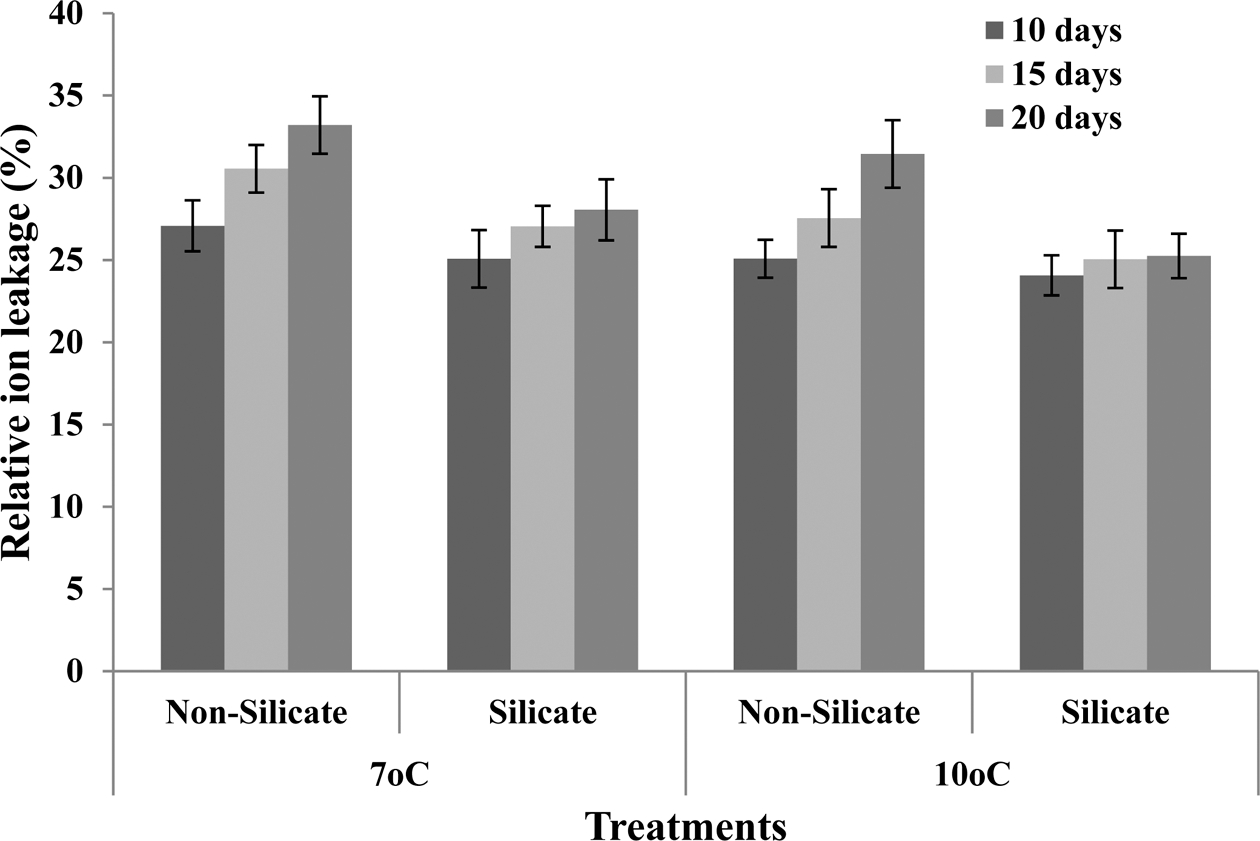
Silicate treatments significantly reduced ion leakage from the seedlings under low temperature storage. Relative ion leakage of the seedlings treated with silicate was lower in both 7±1°C and 10±1°C storage than that in the control (Fig. 5).
Discussion
Although Si has not been considered as an essential element for higher plants, it has been proven to be beneficial for the healthy growth and development of many plant species, particularly graminaceous plants, such as rice and sugarcane, and some cyperaceous plants (Epstein, 1999; Liang, 1999; Liang et al., 2005; Ma et al., 2001). Gong et al. (2003) observed that silicon increased plant height, leaf area, and dry mass of wheat even under drought. Similarly, Singh et al. (2006) reported that Si application was able to increase dry matter and yield in rice. Silicon can indirectly increase in growth and yield in cereals. Ma and Takahashi (1990) concluded that silicon application could enhance phosphate uptake in rice, resulting in the increased growth and yield. Therefore, it was of interest to test whether silicate treatment could improve tomato growth. As reported in previous studies (Gao et al, 2006; Takahashi, 1990), silicate treatment with low concentration improved tomato seedling performance (Table 1). The highest growth parameters were observed in the seedlings treated with 16mM of silicate (Table 1, 2).
While the transpiration rate decreased with the increase of silicate concentrations up to 32mM, chlorophyll contents increased (Table 1, Fig. 3A). This is consistent with previous reports showing that Si supplementation in melon (Cucumis melo L.) resulted in elevated chlorophyll levels and reduced transpiration rates (Lu and Cao, 2001). Gao et al. (2006) found that 2mM silicon application significantly decreased the transpiration rate and stomatal conductance for both adaxial and abaxial leaf surfaces in maize. However, no significant reduction in transpiration rate and stomatal diffusive resistance was observed from silicate treatment above 32mM (Fig. 3A).
Application of silicate fertilizer affected plant height, leaf area, fresh and dry weight of shoot and root, and root mor- phology of the studied tomato seedlings. Growth parameters and root morphology of the seedlings in silicate treatments were higher than those in non-silicate treatment. Dry weight of root and T/R ratio improved significantly by application of silicate fertilizer. Application of silicate enhanced the growth characteristics of the tomato seedlings in low temperature, such as plant height and leaf chlorophyll content. Therefore, silicate appears to be involved in the fortification of plants against oxidation of cell membranes, leading to the protection of plant structures and various functions under stress conditions. Vu et al. (2015a) also pointed out that silicate could reduce the chilling injury index during low temperature by reducing relative ion leakage and leaf damage of Chinese cabbage seedlings. In the present study, it was found that the tomato seedlings treated with silicate fertilizer recovered faster than those without treatment, indicating that silicate fertilizer can be used to improve the quality of tomato seedlings during low temperature storage.
Electrolyte leakage is one of the components connected with abiotic stresses, indicating that silicate treatment could prevent injury from chilling temperature.
To onclude, silicate fertilizer stimulated the growth and development of tomato seedlings by increasing growth parameters. However, the growth parameters decreased in the seedlings treated with 128 and 256mM of silicate, indicating that a higher concentration of silicate can have negative effects on plant growth. The transpiration rate decreased and stomatal diffusive resistance increased with the increase of silicate concentration up to 32mM. Silicate could reduce the chilling injury index and relative ion leakage during low temperature.