

Introduction
Materials and Methods
1. Experimental site, plant material, and LED SI treatment design
2. Manufacture and installation of LED SI system
3. Growth and yield of paprika plants
4. Plant photosynthetic physiological measurements
5. Statistical analysis
Results
1. Light environment modification under LED supplemental irradiation
2. Photosynthetic gas exchange and chlorophyll fluorescence responses
3. Difference in growth and yield of paprika plant
4. Estimation of increase in yield and sales based on farm size
Discussion
Introduction
The domestic paprika (Capsicum annuum L.) industry has tended to see a slight increase in cultivation area and production since 2020, but the export share has experienced a steady decline, falling from 37% in 2020 to 16.7% in 2024 (KAFFTC 2024). However, Korean winter productivity (January-February) declines critically due to insufficient solar radiation, reaching only 35% of Dutch production levels (Jeong et al. 2008a; Jeong et al. 2009; Vermeulen 2008). This constraint is physiological. While paprika requires a light saturation point of 1,100 μmol·m-2·s-1 (RDA 2018), Korean winter conditions frequently fall short of this threshold due to low solar elevation and persistent overcast conditions. The 50-60 day flowering-to-harvest interval means flowering Novemner- December directly determines January-February yields—the period with the most severe market supply shortages. Supplemental irradiation offers the only viable horticultural solution, yet adoption remains limited due to economic concerns about cost-effectiveness during the restricted low-light period.
Light environment fundamentally governs photosynthetic carbon assimilation and crop productivity (Jeong et al. 2009; Heuvelink et al. 2004; Jeong et al. 2008b; Marcelis et al. 2004). Beyond photosynthesis, light quality regulates stomatal aperture through phytochrome and cryptochrome photoreceptors, with blue and red wavelengths exhibiting particularly strong stomatal responses (Shimadzu et al. 2019; Lee et al. 2012). Stomatal conductance (SC) and vapor pressure deficit (VPD) subsequently modulate transpiration and CO2 uptake capacity. Previous research demonstrated positive correlations among transpiration rate, VPD, and solar radiation in greenhouse paprika (Tai et al. 2010; Verma et al. 2020; Lee et al. 2020), with leaf temperature predominantly controlled by air temperature (Lee et al. 2021; Yun et al. 2020; Bange 1953) affecting transpiration through water potential gradients (Kwon and Chun 1999).
LED technology offers superior energy efficiency (50% improvement over HPS), targeted spectral output, reduced heat emission, extended lifespan (>50,000 hours), and modular scalability (Maxwell and Johnson 2000; Kycko et al. 2018; Qin et al. 2019). These advantages position LEDs as potentially economically viable for winter productivity enhancement in commercial horticulture. However, limited research exists on LED supplemental irradiation effects on paprika production in commercial greenhouses under severe winter light limitation typical of Korean conditions. Rather than comparing multiple LED treatment regimes under controlled conditions, this study adopted a practical validation approach focusing on a single, commercially implementable LED SI configuration (250 μmol·m-2·s-1, red : white = 3:1) applied specifically to the most light-limited zones within a commercial greenhouse. This design directly addresses the critical question facing Korean paprika growers: can LED supplemental irradiation effectively mitigate winter productivity losses under the worst-case light conditions encountered in actual production environments.
This study evaluated the efficacy of LED supplemental irradiation for improving photosynthetic performance and fruit productivity in paprika grown in commercial greenhouses under winter low-light stress. Specific objectives were: (1) quantify light environment changes (PPFD and spectral quality) at canopy level; (2) assess physiological responses (stomatal conductance, transpiration, chlorophyll fluorescence); (3) determine impacts on growth dynamics and cumulative fruit yield; and (4) evaluate the feasibility of commercial implementation.
Materials and Methods
1. Experimental site, plant material, and LED SI treatment design
The experiment was conducted from November 10, 2021, to March 21, 2022, in a commercial greenhouse producing paprika located in Iksan-si, Jeollabuk-do, South Korea (35°58′16.5″ N, 127°10′00.2″ E), representing typical Korean greenhouse paprika cultivation conditions. The experimental facility was a Venlo-type multi-span glasshouse with an east–west orientation. The paprika cultivar ‘Coletti’ (Enza Zaden, The Netherlands), a widely cultivated commercial variety known for stable fruit quality and productivity, was transplanted on July 28, 2021, and trained to two stems per plant at a commercial planting density of 3.3 plants·m-2. This training system and density represent standard commercial practices in Korean greenhouse paprika production.
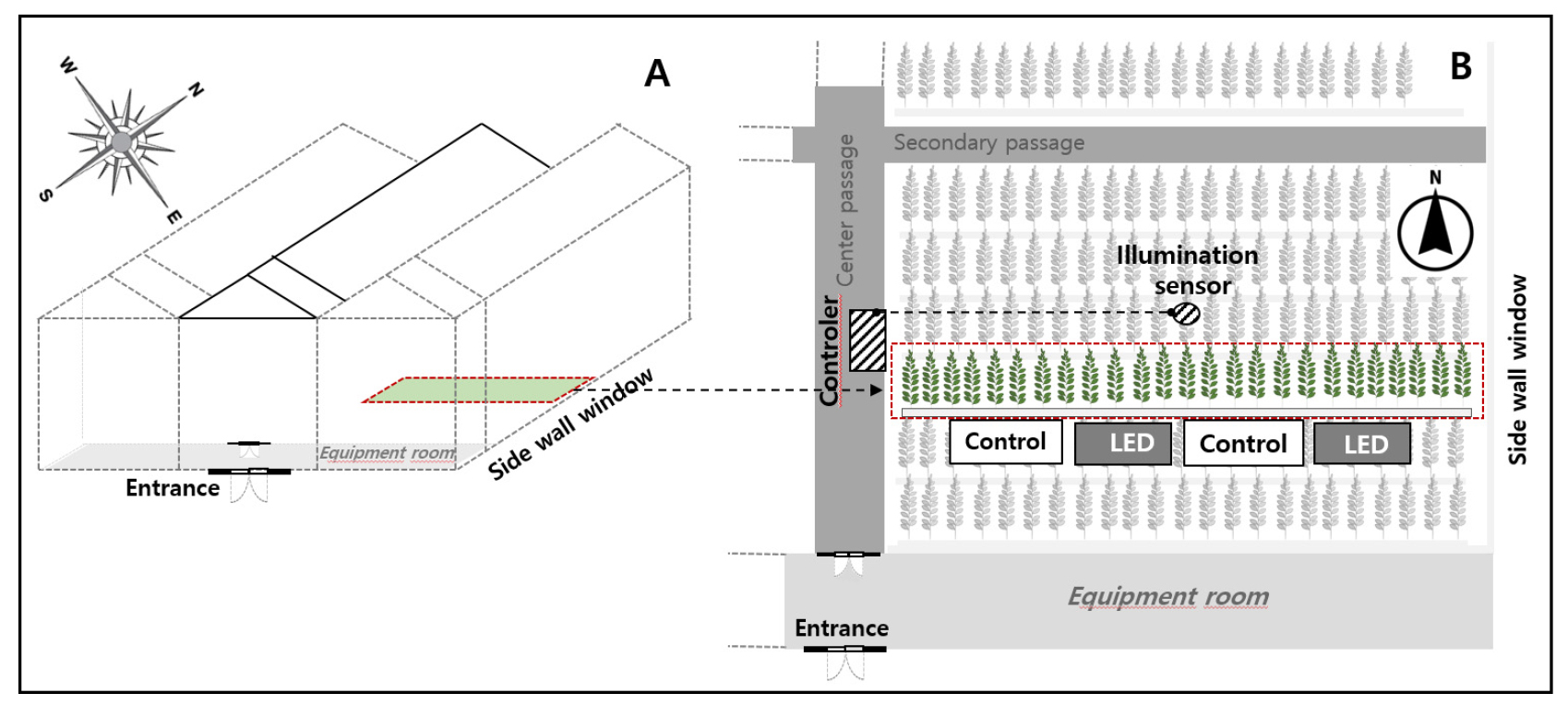
Based on preliminary assessment of spatial variation in solar radiation intensity within the greenhouse and historical productivity patterns, the LED supplemental irradiation (SI) treatment zone was strategically established in the most light-limited area—the eastern section adjacent to the greenhouse entrance on the south side, where planting rows were oriented east-west (Fig. 1A). Based on the grower’s multi-year production records, this location was selected to capture the most severe light deficits within the greenhouse, characterized by minimal light availability and a significant winter productivity decline. This intentional selection of the most constrained growing environment enables rigorous validation of LED SI efficacy under worst-case conditions encountered in commercial production, thereby providing conservative estimates of treatment benefits applicable across the broader production area. To minimize confounding effects from environmental gradients between the central aisle and side ventilation windows, the LED SI treatment area was positioned in the middle zone of the selected row. Within this zone, 4.0 m-long LED SI structures were installed at 4.0 m intervals to provide uniform supplemental irradiation coverage (Fig. 1B). Plants not receiving LED SI, located in adjacent rows under identical greenhouse management practices, served as controls and were designated as natural sunlight (NSL) treatment. A distance of at least 2 m was maintained to prevent interference from the supplemental irradiation in the control treatment. Both LED SI and NSL treatments were replicated twice, with each replicate consisting of 12 plants, providing adequate statistical power (n = 24 plants per treatment) while accounting for spatial variability inherent in commercial greenhouse environments. This experimental design ensures that observed treatment effects reflect the LED SI intervention rather than positional artifacts, and that demonstrated benefits represent achievable outcomes even in the most light-stressed zones of commercial greenhouses.
2. Manufacture and installation of LED SI system
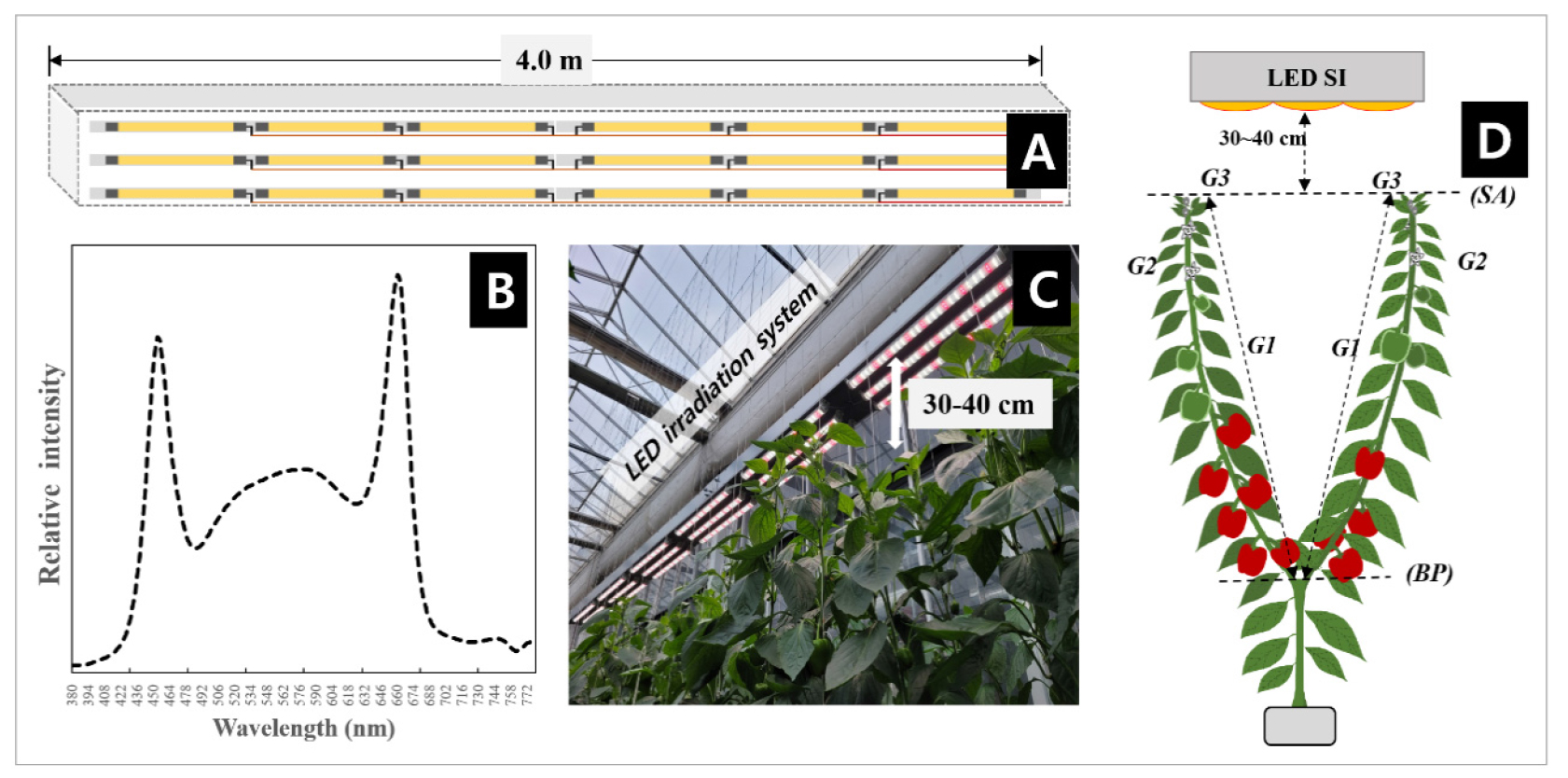
The LED supplemental irradiation system was custom-designed using high-efficiency horticultural LED modules (red : white = 3:1 ratio, peak wavelengths at 660 nm for red and broad-spectrum white phosphor-converted LEDs) (Fig. 2B). Each LED unit delivered a photosynthetic photon flux density (PPFD) of 250 μmol·m-2·s-1, optimized for supplemental irradiation applications in commercial greenhouse environments. The system was designed as modular 4.0 m linear structures to facilitate uniform canopy coverage and practical installation in existing greenhouse infrastructure (Fig. 2A) with a manually adjustable height to maintain a distance of 30-40 cm between the LED system and the apical shoot tips of the plants (Fig. 2C). These structures were mounted parallel to the crop rows at 4.0 m intervals, with LED fixtures positioned 30-40 cm above the shoot apex to balance irradiance intensity with working space requirements for routine cultivation operations. The spectral distribution of the LED system was engineered to maximize photosynthetic efficiency through red wavelength enrichment while maintaining sufficient broad-spectrum white light for visual crop monitoring and morphological regulation. Installation was completed on November 10, 2021 (week 0), and the LED SI system operated continuously during daylight hours throughout the experimental period to supplement natural solar radiation during the critical winter low-light season and was controlled based on an internal light intensity threshold of 300 μmol·m-2·s-1 at the installation location.
3. Growth and yield of paprika plants
Plant growth measurements commenced on December 17, 2021, five weeks after initiating LED treatment, and were conducted at weekly the initiation of LED SI treatment, node number, and flower number were recorded from the branch point (BP, Fig. 2D) using 20 plants per treatment (measurement location G1, Fig. 2D). The number of flowers represented the count of flowers present on plants at each weekly assessment. Mature fruits were harvested and counted to determine cumulative fruit yield per plant throughout the experimental period.
4. Plant photosynthetic physiological measurements
Photosynthetic performance was evaluated by measuring stomatal conductance (SC), transpiration rate (TR), vapor pressure deficit (VPD), quantum yield of photosystem II (ØPSII), and leaf temperature (LT) on leaves located 20-30 cm below the stem apex. Measurements were conducted weekly using a combined porometer and fluorometer (LI-600, LI-COR, Lincoln, NE, USA). Light intensity (photosynthetic photon flux density, PPFD) and spectral composition near the stem apex were quantified using a spectrometer (LI-180, LI-COR, Lincoln, NE, USA) at measurement locations G2 and G3 (Fig. 2D). All measurements were performed between 11:00 and 14:00 h to capture peak daily light intensity periods and minimize diurnal variation effects.
5. Statistical analysis
Statistical analyses were performed using SPSS software (Version 19.0, SPSS Inc., Chicago, IL, USA). For all variables except harvested fruit number, only data collected during the period when PPFD was consistently higher under LED SI than NSL (designated as period d′ in Fig. 5) were included in analyses. This exclusion was necessary because after period d′, PPFD measured under NSL exceeded that under LED SI due to increased sun altitude and shading effects from the LED structure, rendering these data unsuitable for evaluating LED SI effects. Mean differences between treatments (NSL vs. LED SI) were assessed using independent-samples t-tests, with variance homogeneity determined by Levene’s test. Statistical significance was set at P ≤ 0.05. Relationships among key variables were examined using linear regression analysis, with coefficient of determination (R2) reported to indicate goodness of fit.
Results
1. Light environment modification under LED supplemental irradiation
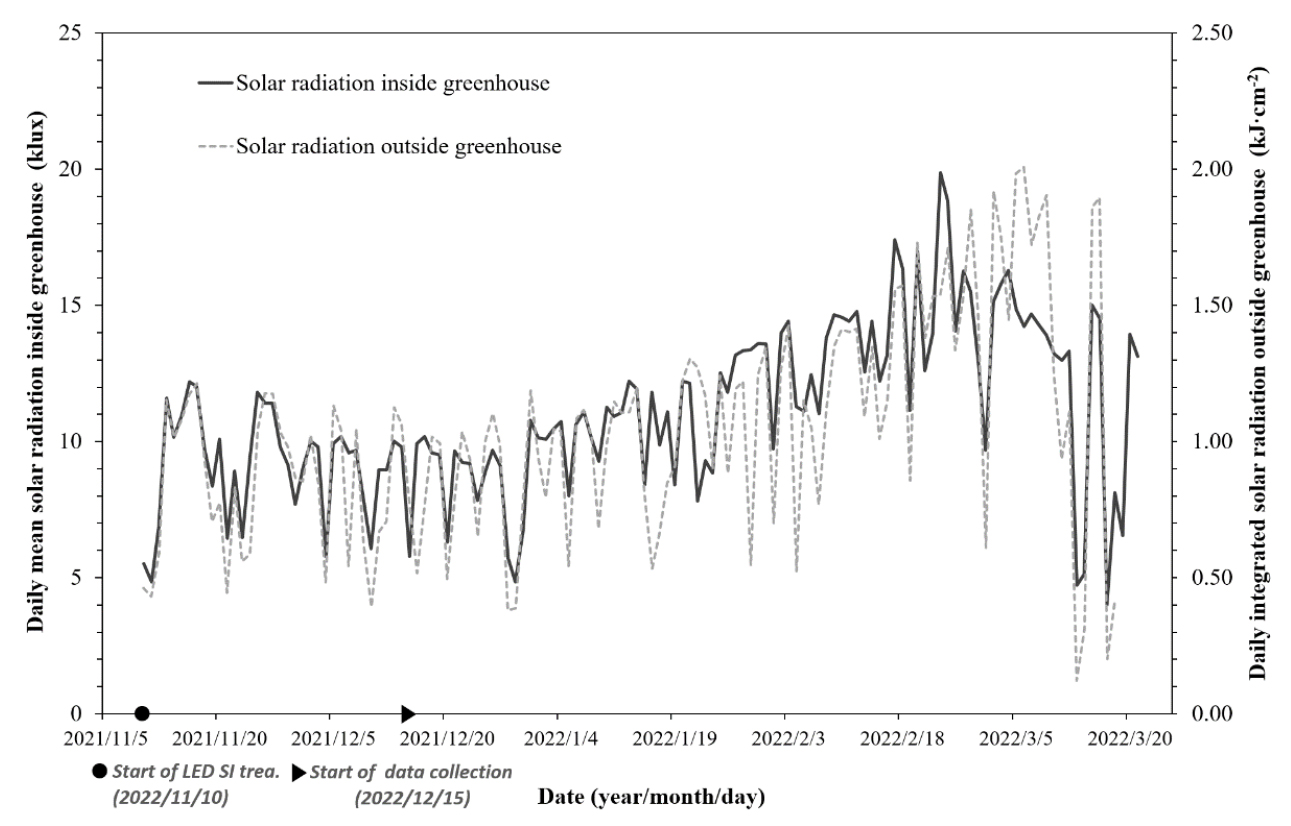
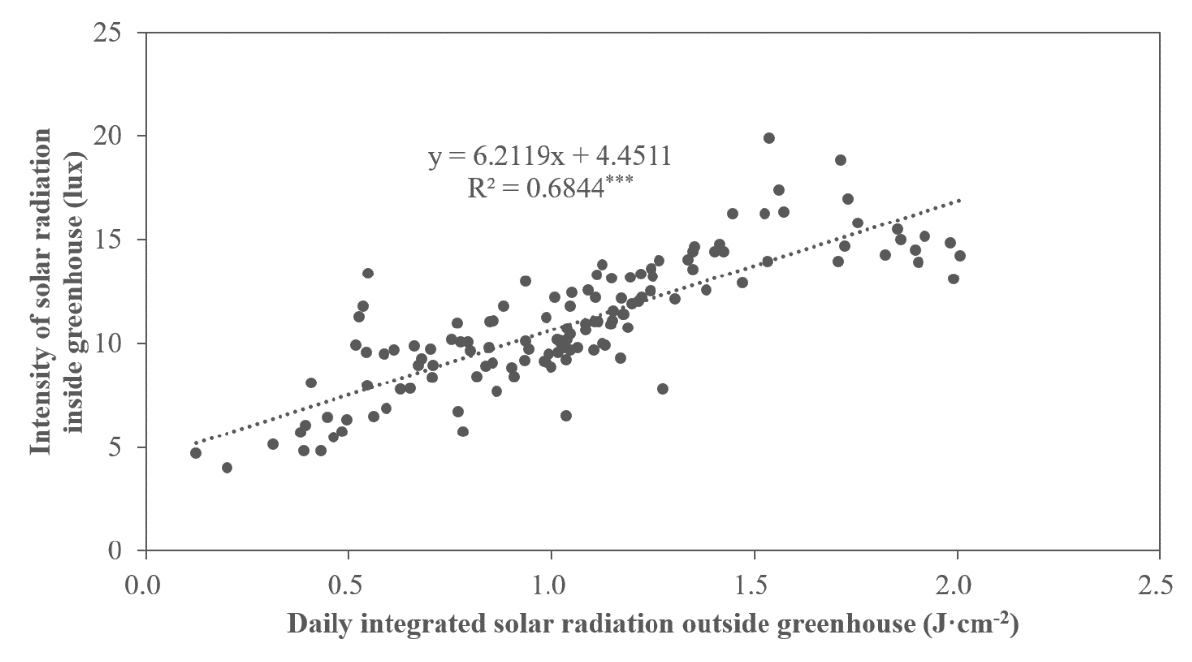
Daily solar radiation measured outside (J·cm-2) and inside (klux) the greenhouse revealed severe light limitation throughout winter (Fig. 3). Internal radiation (ISRG) ranged 5.0-20.0 klux, substantially below paprika’s light saturation point (30 klux, 1,100 μmol·m-2·s-1) (RDA 2018). External (OSRG) and internal radiation showed strong correlation (R² = 0.6844, P ≤ 0.001; Fig. 4), though this weakened over time due to seasonal sun angle changes and increased thermal screen deployment (Myung 2008). Kwon and Chun (1999) identified covering materials and sun altitude as primary factors affecting internal light transmission, with lowest levels beneath thermal curtains (Myung 2008).
PPFD at stem apex was continuously monitored (Fig. 5). From December 17, 2021 to March 8, 2022 (weeks 5-13), LED SI consistently elevated PPFD above NSL, confirming effective supplementation during critical low-light periods. After week 13, NSL exceeded LED SI because of increasing sun altitude combined with shading from the LED structure (period d′, Fig. 5); therefore, these data were excluded from the physiological analyses. During period d′, the mean PAR intensity measured between 11:00 and 14:00 h was 240.1 μmol·m-2·s-1 under LED SI and 197.7 μmol·m-2·s-1 under NSL, representing a 21.4% increase under LED SI. Red wavelength intensity increased by 44.8% under LED SI (P ≤ 0.001), exceeding the proportional increase in PPFD and demonstrating spectral enrichment. The R/FR ratio also increased by 110.6% under LED SI (Table 1, P ≤ 0.001), substantially modifying the light-signaling environment. The reversal observed after week 13 was attributed to shadows cast by the LED SI structure (Fig. 2A, 2C) as the solar altitude increased toward spring. Although the nominal PPFD of the LED SI system was 250 μmol·m-2s-1. The modest difference between system output and measured PPFD at the canopy level reflects the inverse-square relationship between distance and irradiance (Johnson et al. 1993), as the LED fixtures were positioned 30-40 cm above the measurement point. Within the PAR spectrum, red wavelength intensity—which critically influences plant morphogenesis and photosynthetic efficiency—was significantly higher under LED SI than NSL (P ≤ 0.001). Notably, the proportional increase in red light intensity under LED SI exceeded the increase in total PPFD between treatments, resulting in the spectral enrichment effect of the LED system. The red-to-far-red (R/FR) ratio was also significantly elevated under LED SI compared to NSL (Table 1, P ≤ 0.001), indicating substantial modification of the light signaling environment.
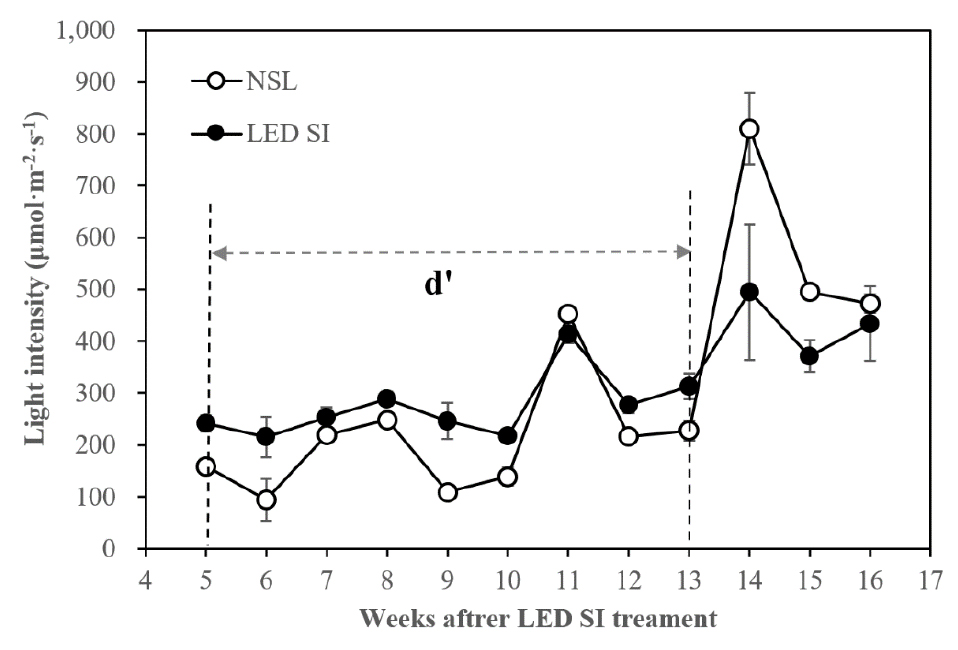
Fig. 5
Changes in light intensity near plant leaves during study period in paprika’s greenhouse. NSL, natural sunlight (non-LED SI); LED SI, LED supplemental irradiation. d′, period collecting of plant growth data used for analysis, excluding number of harvested fruits and number of flowers set plant (because, from the 14th week after LED SI the light was blocked by the structure due to the higher altitude of sun). Bars are standard of error of mean
Table 1
Quantitative analysis of light intensity and spectral quality (Red/Far-red ratio) at the shoot apex under Natural Sunlight (NSL) and LED Supplemental Irradiation (LED SI)
| Lighting types |
Total light intensity (μmol·m-2·s-1) |
Intensity of red wavelength (μmol·m-2·s-1) | R/FR ratio |
| NSL | 197.7 | 74.9 | 1.23 |
| LED SI | 240.1 | 108.3 | 2.59 |
| T-value (Significance) | -2.497 (**) | -3.397 (**) | -5.728 (***) |
2. Photosynthetic gas exchange and chlorophyll fluorescence responses
Leaf temperature and VPD showed no significant treatment differences (Table 2), indicating LED SI did not alter thermal or atmospheric moisture environment. Leaf temperature averaged 18.43 ± 0.88°C (NSL) and 20.71 ± 0.17°C (LED SI); VPD was 0.710 ± 0.051 kPa (NSL) and 0.688 ± 0.073 kPa (LED SI). However, transpiration rate and stomatal conductance—critical indicators of photosynthetic capacity—significantly increased under LED SI (P ≤ 0.05). Transpiration rate increased 32.9% from 1.681 ± 0.438 to 2.234 ± 0.548 mmol·m-2·s-1, while stomatal conductance increased 45.4% from 0.262 ± 0.077 to 0.381 ± 0.136 mol·m-2·s-1. These enhancements likely resulted from blue and red light components in LED SI directly activating stomatal photoreceptors (Shimadzu et al. 2019; Lee et al. 2012), promoting stomatal opening and CO2 assimilation capacity even without LT or VPD changes. Correlation analysis confirmed stomatal conductance exhibited significant positive correlations with air temperature (r = 0.642, P ≤ 0.01), leaf temperature (r = 0.533, P ≤ 0.01), and light intensity (r = 0.450, P ≤ 0.01) under NSL conditions, suggesting that stomatal behavior was associated with environmental conditions under NSL conditions.
Table 2
Comparison of leaf physiological parameters including temperature, transpiration rate, stomatal conductance, and vapor pressure deficit between NSL and LED SI treatments
| Lighting types |
Leaf temperature (℃) |
Transpiration rate (mmol·m-2·s-1) |
Stomatal conductance (mol·m-2·s-1) |
Vapor pressure deficit (kpa) |
| NSL | 19.6 | 1.740 | 0.289 | 0.668 |
| LED SI | 20.2 | 1.940 | 0.326 | 0.669 |
| T-value (Significance) | -1.397 (NS) | -2.093 (*) | -2.093 (*) | -0.037 (NS) |
Measurements were conducted weekly between 11:00 and 14:00 h during period d′ (Fig. 5).
Chlorophyll fluorescence parameters, including maximum fluorescence under light-adapted conditions (Fm′), steady- state fluorescence (Fs), and quantum yield of PSII (ØPSII), were measured on fully expanded leaves to assess photosynthetic efficiency and stress status (Table 3). Fm′ did not differ significantly between treatments (424.7 ± 0.0 under NSL vs. 419.1 ± 0.0 under LED SI), indicating similar maximum photosynthetic capacity potential. However, Fs and ØPSII showed significant treatment differences with critical horticultural implications. Fs was significantly lower under LED SI (230.7 ± 22.0) compared to NSL (264.2 ± 28.0) (P ≤ 0.01), indicating reduced baseline fluorescence and improved photochemical quenching under supplemental irradiation. More importantly for practical horticultural applications, ØPSII was significantly higher under LED SI (0.695 ± 0.007) than NSL (0.665 ± 0.025) (P ≤ 0.01), representing a 4.5% increase in photosynthetic quantum efficiency—a substantial improvement given the already constrained light environment. Healthy, unstressed leaves typically exhibit ØPSII values near 0.83 under optimal conditions (Maxwell and Johnson 2000; Kycko et al. 2018), and reductions in ØPSII serve as diagnostic indicators of biotic or abiotic stress (Qin et al. 2019). The measured ØPSII values in both treatments, while below the theoretical maximum, reflect the suboptimal light conditions prevailing during the winter experimental period. Nevertheless, the significantly higher ØPSII under LED SI demonstrates that supplemental irradiation effectively alleviated photoinhibition and maintained higher photosynthetic capacity under low-light stress, with direct implications for carbon assimilation and fruit productivity. Following the methodology of Qin et al. (2019), relative electron transport rate (rETR) was calculated using the formula: rETR = [(Fm′ − Fs)/Fm′] × PAR × 0.84 × 0.5. Utilizing the PAR intensities from Table 1 (197.7 and 240.1 μmol·m-2·s-1) and ØPSII from Table 3 (0.665 and 0.695), the rETR was 55.1 μmol·m-2·s-1 under NSL and 69.9 μmol·m-2·s-1 under LED SI, representing a substantial 26.9% increase in electron transport capacity. This enhancement indicates that LED SI not only increased light availability but also maintained higher photosynthetic efficiency and electron transport activity under the low-light stress conditions prevailing during winter months. The improved electron transport capacity directly supports enhanced carbon assimilation rates, providing the physiological basis for the observed improvements in fruit productivity and demonstrating the practical horticultural value of LED SI technology for winter greenhouse production systems.
Table 3
Chlorophyll fluorescence parameters measured on fully expanded leaves under NSL and LED SI treatments
| Lighting types | Fm’ | Fs | ØPSII |
| NSL | 424.7 | 264.2 | 0.665 |
| LED SI | 419.1 | 230.7 | 0.695 |
| T-value (Significance) | -1.023 (NS) | -2.769 (**) | -2.998 (**) |
Linear regression analysis revealed significant relationships (P ≤ 0.001) between key physiological variables (Fig. 6). Stomatal conductance strongly was positively associated with transpiration rate (regression coefficient = 8.89 mmol·m-2·s-1, R2 = 0.892), confirming SC as the primary determinant of water vapor flux. Light intensity positively correlated with both leaf temperature (RC = 0.022°C per μmol·m-2·s-1, R2 = 0.784) and transpiration rate (RC = 0.010 mmol·m-2·s-1, R2 = 0.681), validating the mechanistic pathway: increased PPFD → elevated SC → enhanced TR. These relationships demonstrate that LED SI-induced PPFD enhancement directly drives stomatal opening and gas exchange improvements, providing the physiological mechanism underlying observed productivity gains.
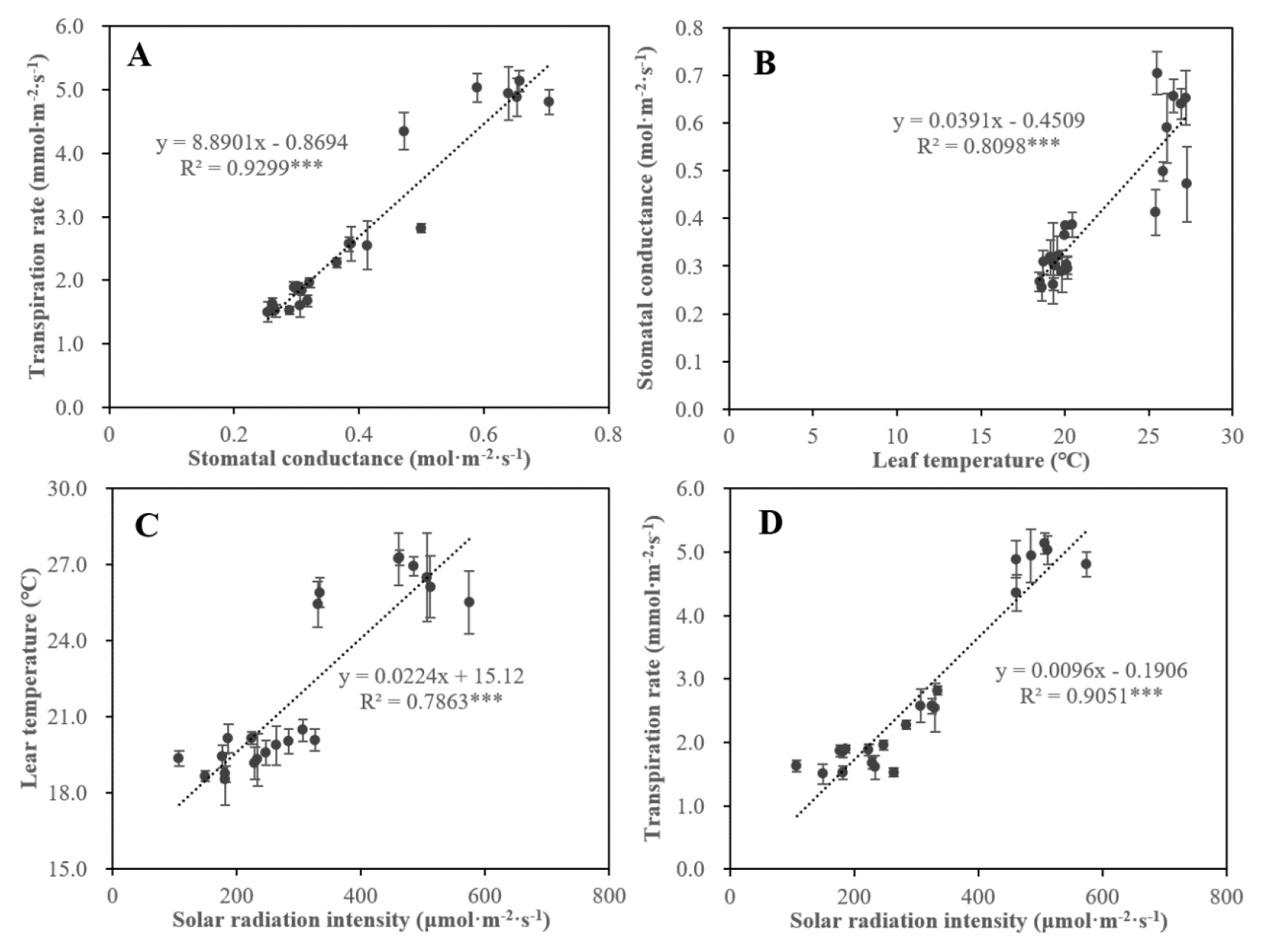
Fig. 6
Linear regression models illustrating the interrelationships among stomatal conductance, transpiration rate, leaf temperature, and incident solar radiation. It is created by combining the data from the two treatments (= natural sunlight, LED supplemental irradiation). Bars are standard of error of mean
3. Difference in growth and yield of paprika plant
The weekly increment of stem length, node number, and flower number did not show a significant difference between the two treatments (Table 4). The change in the cumulative increase of stem length tended to be higher in LED SI than in NSL, but there was no significant difference (Fig. 7A). The average weight of the harvested fruits also did not show a significant difference (Table 5). Fruit size is determined by the number and size of cells (Bohner and Bangerth 1988; Bertin 2005) and is affected by temperature (Thanopoulos et al. 2013; Jang et al. 2016). However, in this study, the lack of a significant difference between treatments was likely due to both treatments being maintained under the same air temperature. The cumulative number of harvested fruits was significantly higher in LED SI (19.3 fruits·plant-1) than in NSL (1.4 fruits·plant-1), and the number of fruits harvested per week after 12 weeks of LED SI treatment was also higher (Fig. 7B). Jang et al. (2016) reported that yellow paprika cultivars produced 14-15 fruits·stem-1 (28-30 fruits·plant-1) at 32 nodes·stem-1 (64 nodes·plant-1) in plastic film greenhouses in northern Korea. Compared with that result, fruit productivity in the present glasshouse study was very low, confirming that the experimental site represented a severely low-productivity environment.
Table 4
Weekly average increment in stem length, node number, flower number of plant during 17 Dec. 2021-22 Mar. 2022 according to natural sunlight (NSL) and LED supplemental irradiation (LED SI) in paprika’s greenhouse
| Lighting types |
Stem growth (cm·stem-1) |
Nodes development (no.·stem-1) |
Flower developmentz (no.·stem-1) |
| NSL | 5.8 | 1.0 | 2.0 |
| LED SI | 6.1 | 1.1 | 2.0 |
| T-value (Significance) | -0.154 (NS) | -0.403 (NS) | 0.210 (NS) |
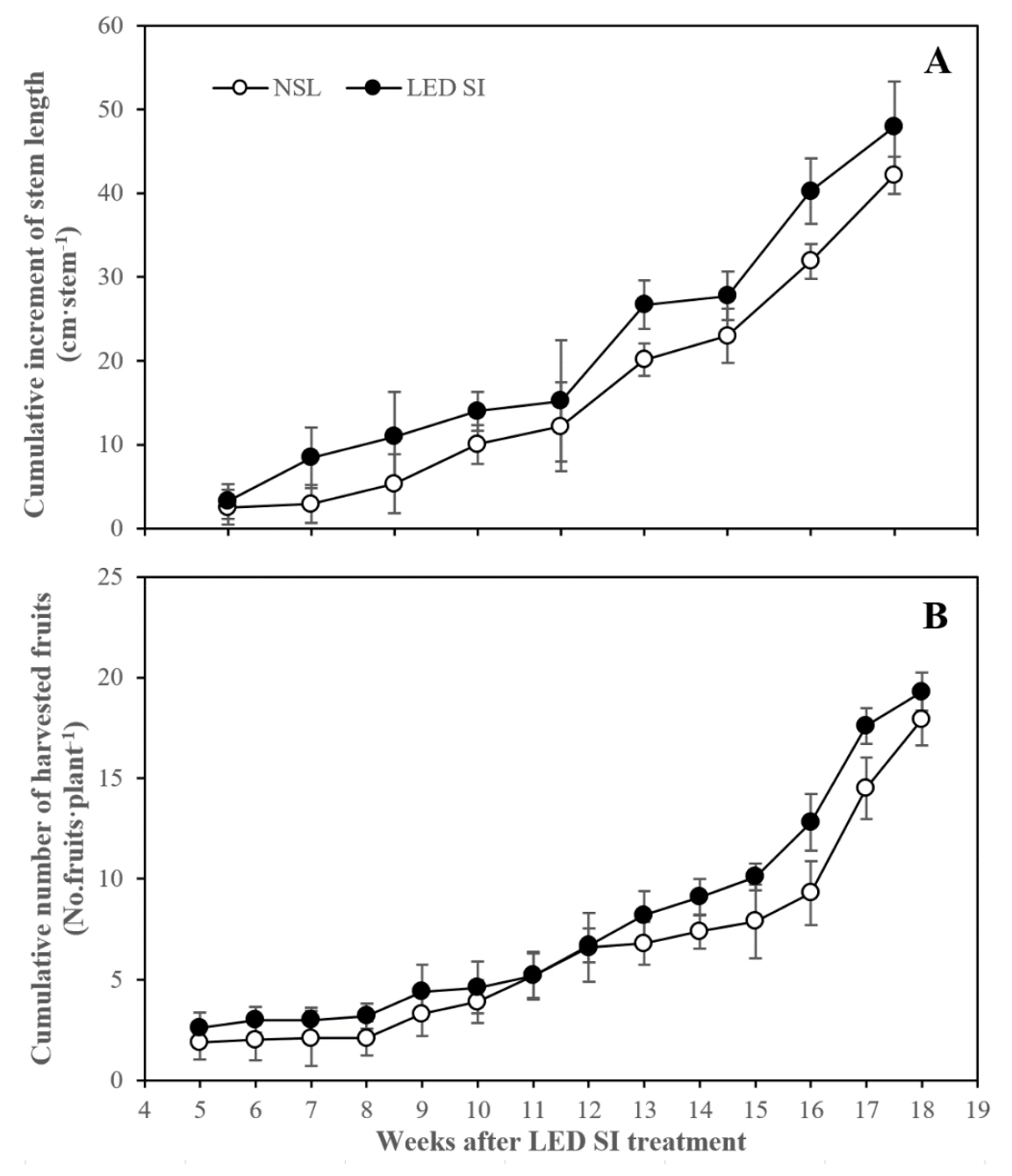
Table 5
Weight and number of harvested fruits in plant during study period (17 Dec. 2021-22 Mar. 2022) according to natural sunlight (NSL) and LED supplemental irradiation (LED SI) in paprika’s greenhouse
| Lighting types |
Fruit weight (g·fruit-1, A) |
No. of harvested fruits (No.·plant-1, B) |
A × B (kg·m-2) |
| NSL | 184.2 | 17.9 | 10.89 |
| LED SI | 192.3 | 19.3 | 12.24 |
| T-value (Significance) | -0.241 (NS) | -2.896 (*) | - |
The cumulative number of harvested fruits showed an exponential regression relationship with the cumulative number of flowers (Fig. 8). These fruits were harvested 7-8 weeks after flowering. For each additional flower per plant, the number of harvested fruits per plant increased by 0.1691 fruits·plant-1 under LED SI, compared with 0.1645 fruits·plant-1 under NSL, representing an additional 0.0046 fruits·plant-1.
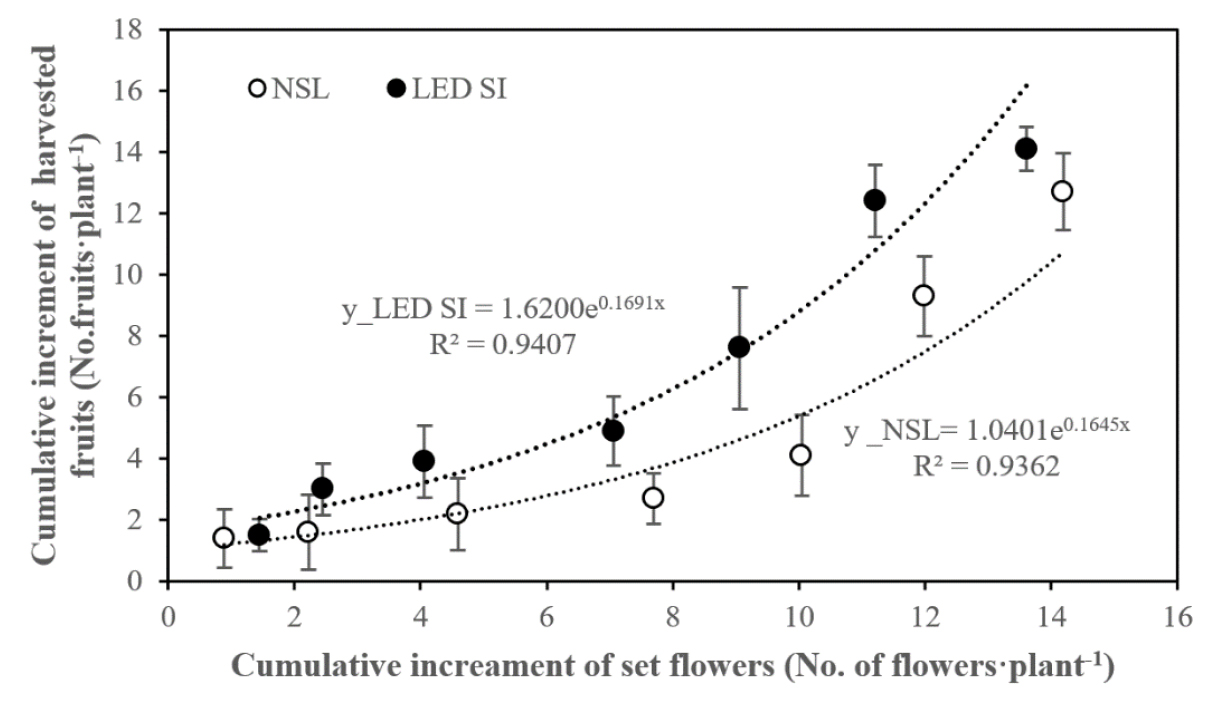
Fig. 8
Regression analysis between cumulative increment of set flower (CISF) and cumulative increment of harvested fruits (CIHF) according to natural sunlight (NSL) and LED supplemental irradiation (LED SI) in paprika’s greenhouse. Period of used data: CISF, 17 Dec. 2021- 19 Jan. 2022; CIHF, 26 Jan. 2022-22 Mar. 2022, which is the period ‘7-8 weeks’ after each date of measuring the number of flowers in CISF, and this ‘7-8 weeks’ is the period from flowering to harvest of the paprika cultivar used in the study. Bars are standard of error of mean
LED supplemental irradiation significantly enhanced fruit yield through improved photosynthetic efficiency rather than vegetative stimulation. Under low winter radiation, LED SI increased stomatal conductance (+12.8%), transpiration (+11.5%), and PSII quantum efficiency (+4.5%) without affecting stem elongation or node formation. This selective response indicates that supplemental light primarily alleviated carbon source limitation during reproductive development rather than promoting structural growth, consistent with established principles that supplemental lighting under light stress targets assimilate availability (Marcelis et al. 2004; Smith and Whitelam 1997).
Sweet pepper exhibits exceptional sensitivity of flower and fruit retention to carbon limitation under prolonged low-light conditions (Marcelis et al. 2004; Franklin 2009). This makes winter paprika production particularly vulnerable when cumulative solar radiation falls below 8-10 MJ·m-2·day-1 (Jeong et al. 2009). The elevated R/FR ratio (2.44 vs. 1.08) achieved through LED SI promoted stomatal opening via red-light-activated photoreceptor pathways (Shimadzu et al. 2019; Smith and Whitelam 1997), improving CO2 diffusion and photosynthetic capacity during limited natural irradiance.
The 26.9% increase in relative electron transport rate under LED SI provides the mechanistic basis for enhanced carbon gain. Higher electron transport maintained greater NADPH and ATP synthesis, supporting increased carboxylation even under suboptimal PPFD. This enabled preferential assimilate allocation to developing fruits during the critical 2-4 week post-anthesis period when abortion decisions depend on source-sink carbon balance (Marcelis et al. 2004). This selective allocation reduced abortion rates (+7.8% fruit number) without altering fruit weight, confirming that LED SI alleviated source limitation during early fruit development rather than extending fruit-filling duration.
The exponential relationship between cumulative flower formation and harvested fruit number (7-8 week lag) demonstrates that LED SI exerted primary effects during early reproductive development. This temporal specificity suggests that strategic period-targeted supplemental irradiation could achieve comparable yields at reduced energy costs versus continuous season-long supplementation—a critical consideration for commercial optimization.
These findings validate that reproductive processes in Capsicum are more responsive to source-sink balance modulation than vegetative stimulation under suboptimal light (Marcelis et al. 2004; Franklin 2009). For commercial operations in regions with chronic winter light deficiency, LED SI represents an effective precision tool for mitigating seasonal yield gaps without promoting excessive vegetative growth that increases labor and disease pressure.
4. Estimation of increase in yield and sales based on farm size
Commercial-scale extrapolation demonstrates economic viability of LED SI under Korean greenhouse conditions. Using standard parameters (1 ha; 3.3 plants·m-2), the observed 1.4 additional fruits per plant translates to 46,200 fruits·ha-1 (calculation: 10,000 m2 × 3.3 × 1.4). With average fruit weight of 188.0 g, this yields 8.685 tons·ha-1 additional production over winter.
Revenue analysis incorporated Korea’s bifurcated market structure (60% domestic, 40% export to Japan) (KAFFTC 2024). Using 2021 prices (domestic: 6.154 USD·kg-1; export FOB: 2.855 USD·kg-1), the weighted average projects 4,200 USD·ha-1 incremental gross revenue—representing 8-10% improvement over baseline winter production value and providing substantial margin for LED capital amortization and electricity costs.
However, economic viability depends on site-specific factors. Baseline light availability varies substantially across locations due to latitude, glazing materials, and structural design. Greenhouses with higher baseline winter light show proportionally smaller yield responses, reducing LED investment returns. Regional electricity costs (50-80 USD·m-2 installation; variable operational rates) create 3-5 year payback periods requiring careful financial analysis. Additionally, this analysis excluded potential heating cost savings from LED-generated heat and reduced disease pressure from improved transpiration—secondary benefits that could substantially improve net economic advantage.
While this analysis demonstrates fundamental economic viability under Korean conditions, comprehensive techno- economic modeling incorporating baseline light climate, energy costs, market access, and infrastructure is essential for predicting net profitability and optimal system design for individual operations.
Discussion
This study investigated physiological mechanisms and horticultural outcomes of LED supplemental irradiation on greenhouse paprika under winter low-radiation conditions. LED SI successfully addressed chronic winter yield reduction by enhancing photosynthetic efficiency and carbon assimilation during reproductive development. Key findings include: (1) LED SI increased R/FR ratio from 1.08 to 2.44 (+126%), improving stomatal conductance (+12.8%), transpiration (+11.5%), PSII quantum yield (+4.5%), and relative electron transport rate (+26.9%) without thermal stress; (2) These physiological improvements enhanced fruit retention (+7.8%) without affecting vegetative growth or fruit size, confirming selective alleviation of carbon source limitation during critical early fruit development; (3) Commercial-scale extrapolation projects 8.685 tons·ha-1 additional winter production, translating to -4,200 USD·ha-1 incremental revenue under Korean market conditions.
LED supplemental irradiation represents an effective and economically viable technology for alleviating winter yield reduction in paprika cultivation under low-radiation greenhouse environments typical of temperate regions. The technology is particularly suited for high-value export- oriented systems where off-season yield improvements command premium prices. Strategic implementation targeting the flowering-to-fruit-set window could optimize economic returns relative to electricity costs.
Future research should address: (1) adjustable LED systems to mitigate structural shadowing (5-8% natural light reduction); (2) optimization of irradiation duration and intensity for maximum profitability relative to regional electricity costs; (3) comprehensive techno-economic modeling incorporating site-specific parameters for diverse production contexts; (4) long-term multi-season studies assessing cumulative effects on plant health and disease pressure. These investigations will enable precision light management protocols optimized for commercial greenhouse operations.