
Original Articles

Journal of Bio-Environment Control. 31 October 2025. 517-525
https://doi.org/10.12791/KSBEC.2025.34.4.517

ABSTRACT


MAIN

  • 서 론

  • 재료 및 방법

  •   1. 실험 재료 및 글루탐산 엽면살포

  •   2. 광합성 측정

  •   3. 단백질 정량, MDA 함량 및 근활력 측정

  •   4. 항산화 효소 활성 분석

  •   5. 생육 특성 조사

  •   6. 통계분석

  • 결과 및 고찰

  •   1. 마늘의 광합성 특성 변화

  •   2. 항산화 효소 활성 변화

  •   3. 마늘의 MDA 및 근활력 변화

  •   4. 생육 특성 변화

서 론

마늘은(Allium sativum L.) 우리나라의 주요 양념 채소 중 하나로 2024년 재배면적은 23,291ha, 생산량은 약 328천톤이며 국내 조미 채소 생산량의 20%를 차지하고 있다(KOSIS, 2024). 우리나라의 1인당 마늘 소비량은 최근 5년간 연평균 7kg 정도이고, 전체 생산량 중 난지형 품종이 80% 내외를 차지하고 있는 것으로 나타났다(KOSIS, 2024). 마늘은 재배기술, 온도와 습도, 토양 성분과 같은 환경요인에 의한 생산량 변화가 크며, 특히 얕은 뿌리와 수분에 민감한 특성 때문에 가뭄과 같은 조건은 마늘의 생장, 품질 및 수확량에 심각한 영향을 미친다(Sattar 등, 2020). 물 부족은 종자 발아와 초기 생장을 억제 하고(Habuš Jerˇci´c 등, 2023), 세포 탈수, 기공 폐쇄 등으로 식물의 대사 불균형을 유발한다(Hussain 등, 2019). 그리고 미토콘드리아, 엽록체, 퍼옥시좀과 같은 세포 소기관에서 활성산소종(ROS, reactive oxygen species)이 생성되고(Kaur와 Asthir, 2017), 과도한 ROS의 축적은 지질과산화, DNA 손상, 단백질의 구조 및 기능의 변화, 영양소 흡수 및 수송 속도 감소, 엽록소 감소, 식물 생장 및 발달 저해 등의 부정적인 영향을 미친다(Chung 등, 2020; Hasanuzzaman 등, 2020; Kaur 등, 2021; Osakabe 등, 2014; Seleiman 등, 2021). 또한 수분 부족은 광합성 기관 손상에 의한 능력의 감소로 잎의 동화산물의 생산이 줄어들고, 작물의 생장 및 수량 등의 감소로 이어진다(Dietz 등, 2021; Qiao 등, 2024; Seleiman 등, 2021)

건조 스트레스 조건에서 마늘의 품질과 수량을 개선하기 위해 분자 생리학적인 방법으로도 접근이 가능하다. 이 방법 중 하나는 글루탐산(Glu, glutamic acid)을 사용하는 것으로, 작물의 생장을 개선하여 스트레스 저항성을 높여 비생물적 스트레스의 유해한 영향을 줄일 수 있다(Kong 등, 2015; Manzoor 등, 2013). 글루탐산은 식물의 생장 및 발달에 중요한 역할을 하는 필수 아미노산 전구체로써 프롤린(proline), GABA, 글루타치온(gluthathione) 등과 같은 항산화제의 생합성에 역할을 하는 중요한 아미노산 중 하나이다(Okumoto 등, 2016; Qiu 등, 2020). 글루탐산의 적용은 다양한 작물의 수분부족, 삼투압, 염분, 질소 결핍 및 온도 스트레스를 줄이는데 효과적인 것으로 알려져 있다(Kan 등, 2017; Lei 등, 2017; Sadak과 Abdelhamid, 2015; Stolarz와 Dziubinska, 2017). 글루탐산은 글리신과 함께 엽록소 생합성에 중요 역할을 하는 필수 대사 산물인 aminolevulinic acid로 전환되는 대사 산물로서(Beale 등, 1975), 글루탐산의 처리는 엽록소 a, b와 카로티노이드 등의 생합성 향상으로 광합성 효율이 증가한다(Hussen 등, 2013; Lv 등, 2009). 또한 글루탐산은 세포 삼투 조절을 통해 기공의 개폐를 조절하고(Dinu 등, 2011), 양파, 마늘, 부추 및 상추 등에 처리시 품질 개선에 효과적이었다(Aghaye Noroozlo 등, 2019; Cao 등, 2010; Franzoni 등, 2021; Haghighi, 2012; Shafeek 등, 2012; Shalaby와 EI-Ramady, 2014).

현재까지 마늘의 환경 스트레스에 대한 글루탐산의 경엽처리 효과 연구는 미흡한 실정으로 건조 조건 하에서 글루탐산 처리는 광합성 능력, 항산화 효소 활성 등을 증진시킴으로써 스트레스에 의한 피해를 경감할 수 있을 것으로 기대된다. 따라서 본 연구는 건조 스트레스 조건에서 글루탐산 처리가 마늘의 광합성 및 생리 활성에 미치는 영향을 구명하고자 수행하였다.

재료 및 방법

1. 실험 재료 및 글루탐산 엽면살포

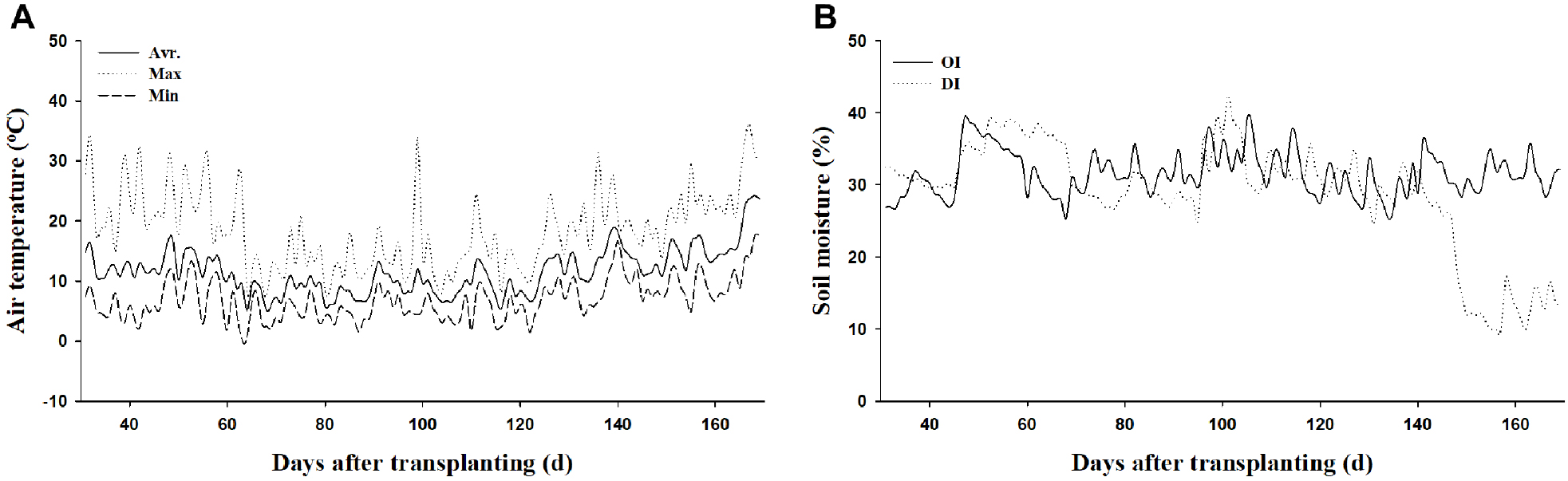
시험 재료인 ‘남도’(Allium sativum L.) 마늘을 사양토 10kg을 채운 와그너포트(1/5000a)에 2021년 10월 24일 정식하였다. 이후 평균기온이 20℃ 유지되는 온실에서 자연광 하에 재배하였으며, 정식 후 150일부터 2주간 무 관수 처리를 하였다. 재배기간 동안의 기상 환경은 데이터로거(WatchDog 1650, Spectrum Tec. Inc., USA), 토양수분 센서(SMEC300, Spectrum Tec. Inc., USA)를 활용하여 1시간 간격으로 10cm 깊이 토양의 수분함량(%)을 측정하였다. 건조 처리 기간의 토양 수분은 평균 13% 정도를 유지하였다(Fig. 1). 건조 처리 7일 후 글루탐산(Glu; L-glutamic acid, sigma aldrich, USA)을 세 처리 농도(10, 80, 169mg·L-1)로 주당 100ml씩 7일간격으로 2회 엽면살포 하였고, 대조구(적습; OI, optimal irrigation)와 무처리(건조; DI, deficient irrigation)는 물을 처리하였다.
https://cdn.apub.kr/journalsite/sites/phpf/2025-034-04/N0090340417/images/phpf_34_04_17_F1.jpg
Fig. 1.

Changes in air temperature (A) and soil moisture (B) during experimental periods.

2. 광합성 측정

휴대용 광합성 측정기(LI-6800, LI-COR Inc., Nebraska, USA)를 이용하여 글루탐산 경엽 처리 후 3일에 각 처리당 6주를 대상으로 광합성 특성을 측정하였다. 광합성 측정기 챔버의 측정 조건은 기온 25℃, 광도는 1000μmol·m-2·s-1 PPFD, CO2 농도 400μmol·mol-1로 설정하였다.

3. 단백질 정량, MDA 함량 및 근활력 측정

글루탐산 경엽 처리 후 3일에 2-4번째 외엽에서 시료를 혼합 채취한 후 액체질소를 사용하여 마쇄 하였다. 각 시료 200mg에 1ml PBS(potassium phosphate buffer saline, pH 7.0)를 혼합하여 4℃, 15,000rpm에서 30분간 원심분리 후 조효소 액을 추출하였다. 전체 수용성 단백질은 Bio-rad protein assay(Bio-rad, USA) 시약을 이용하여 정량 하였다(Bradford, 1976). 세포 손상 및 노화 정도를 분석 하기 위하여 MDA 함량을 측정 하였으며, EZ-Lipid peroxidation(TBARS) assay kit(DoGenBio co., Korea)를 사용하여 분석하였다(Lee 등, 2021). 근활력 측정은 마늘의 뿌리를 채취하여 증류수에 세척 후 이용하였다. 뿌리 시료는 세근을 약 0.5cm 길이로 절단하여 균일하게 혼합한 후 0.1g을 취해 2mL test tube에 넣었다. 그 후 1mL의 증류수를 첨가하여 혼합한 후 Premix WST-1 cell proliferation assay system(Takara Inc., Tokyo, Japan) 시약 10uL를 가하였다. 이후 25℃, 100rpm 및 암 조건에서 반응시키고 3, 6, 18 및 24시간 경과 후 OD420nm에서 흡광도를 측정하였다(Lee 등, 2016).

4. 항산화 효소 활성 분석

글루탐산 처리에 따른 마늘의 항산화 효소 활성 분석을 위하여 asocorbate peroxidase(APX), catalase(CAT), peroxidase (POD) 및 superoxide dismutase(SOD)를 측정하였다. 각 효소 활성은 APX assay kit(Elabscience Biotechnology Inc., USA), Catalase Assay Kit(DoGenBio Co., Korea), Hydrogen Peroxide/Peroxidase Assay Kit(DoGenBio Co., Korea), SOD determination kit(DoGenBio Co., Korea)을 사용하여 분석하였다(Lee 등, 2021).

5. 생육 특성 조사

마늘의 생육 특성은 처리구별 3반복 5주씩에 대해서 초장, 엽장, 엽폭, 엽수, 엽면적, 구고, 구폭, 생구중, 건구중 및 인편수 등을 정식 후 171일에 조사하였다. 엽면적은 엽면적측정기(LI-3100, LI-Cor Inc., USA)를 사용하였다.

6. 통계분석

실험구 배치는 난괴법 5주씩 3반복으로 하였고, 통계분석은 SAS 프로그램(SAS 9.2, SAS Institute Inc., USA)을 이용하여 분산분석(ANOVA)을 실시하였다. 평균간 비교는 LSD 검정을 이용하여 5% 유의수준에서 각 처리 간 유의성을 검증하고, 그래프는 SigmaPlot 프로그램(SigmaPlot 12.5, Systat Software Inc., USA)을 이용하였다.

결과 및 고찰

1. 마늘의 광합성 특성 변화

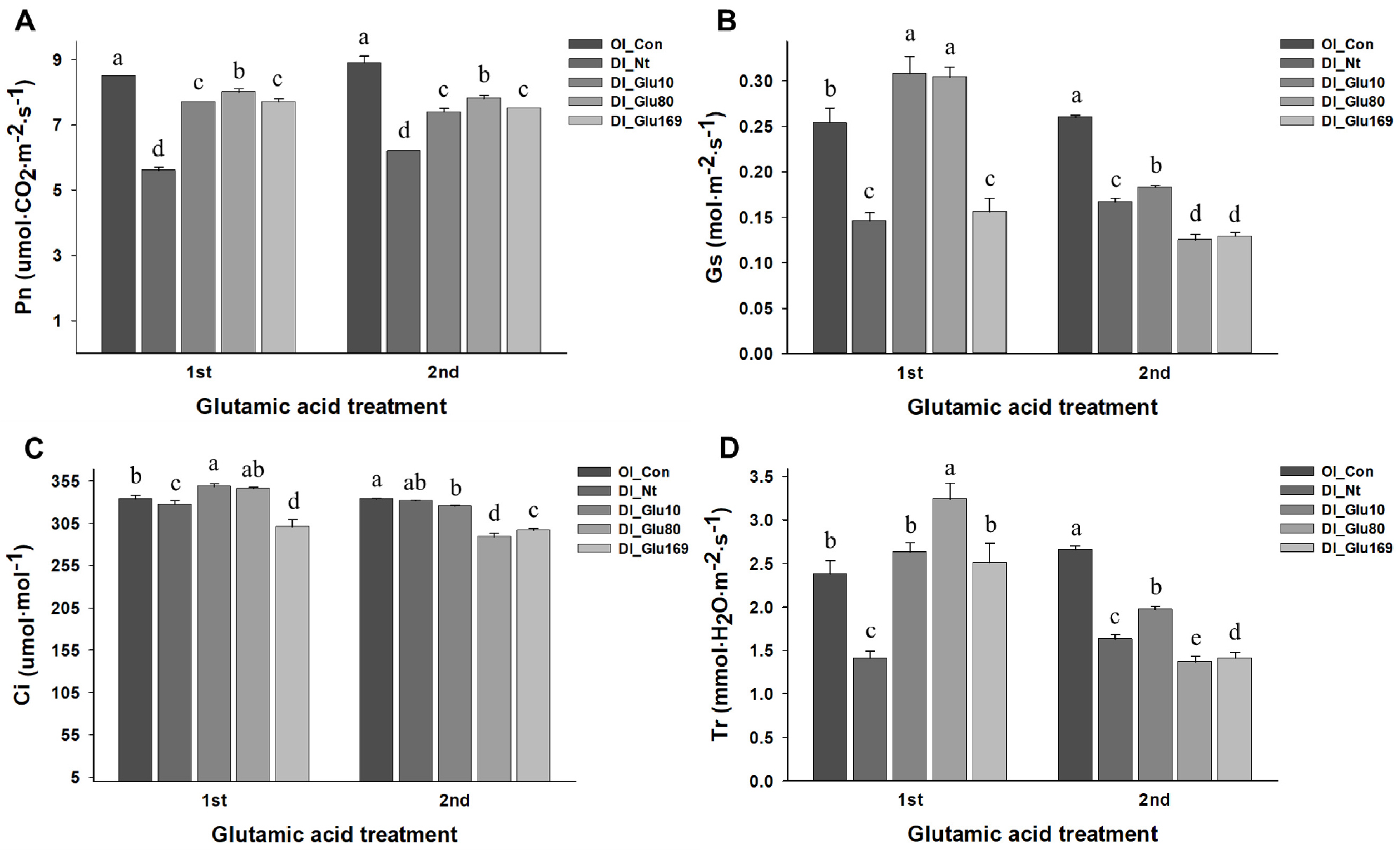
건조 스트레스 조건에서 글루탐산 처리에 의한 마늘의 광합성 특성 변화를 측정하였다(Fig. 2). 마늘의 건조 처리시 광합성 속도는 대조구 대비 30%정도 감소하였으나, 글루탐산 엽면살포 후 무처리 대비 증가하는 경향을 보였다. 글루탐산 1회 처리시 광합성 속도는 무처리 대비 20-44% 정도 증가하였으나 대조구에 비해서는 낮게 측정되었다. 글루탐산 처리구에서 Glu 80mg·L-1 처리가 8.0µmol·CO2·m-2·s-1로 가장 높았다(Fig. 2A). 기공전도도와 증산 속도는 1회 처리에서 Glu80이 0.304mol m-2 s-1와 3.25mmol·H2O·m-2·s-1로 무처리 대비 2배 이상 증가하였으나, 반면에 2회 처리에서는 전반적으로 감소하는 경향을 보였다(Fig. 2B-D). 글루탐산 1차 처리시 세포내 CO2 농도는 Glu10과 80이 무처리 대비 높았으나, 반면 2차 처리에서는 Glu80과 169은 감소하였다(Fig. 2C). 마늘은 토양 수분이 부족하면 잎의 수분포텐셜이 낮아짐으로써 기공을 폐쇄하게 된다. 또한 스트레스가 진행됨에 따라 기공전도도와 증산이 점점 감소하고, 이로 인해 세포내 CO2 수치 또한 크게 감소한다(Farooq 등, 2009; Kovaˇcevi´c 등, 2023; Sánchez-Virosta 등, 2019). 이러한 세포내 CO2 수치는 광합성의 동화율과 전반적 광합성 능력을 감소시키게 된다(Abdelaal 등, 2021; Anjum 등, 2011; Kaiser, 1987; Oguz 등, 2022). 글루탐산은 신호전달물질로서 Ca+의 농도 변화 및 기공 개폐를 조절하여 작물의 광합성특성과 잎의 기능에 긍정적인 효과가 보고된 바 있다(Dinu 등, 2011; Lee 등, 2017; Lv 등, 2009; Yu 등, 2022). 본 실험에서 글루탐산 1, 2회차 처리에서 Glu169의 기공전도도가 무처리 대비 낮게 측정되었고(Fig. 3B), 반면 마늘의 기공전도도가 무처리 대비 낮음에도 불구하고, 광합성 속도는 증가하는 경향을 보였다(Fig. 3A-B). 이는 고농도의 글루탐산 처리시, 세포막의 GLR (glutamate receptor-like)통로가 과도하게 활성화되어 세포내 Ca+ 농도를 급격히 증가시키고, 이로 인해 기공보조세포(guard cell)의 삼투 조절에 영향을 주고 K+ 유출과 세포 수축을 유도하여 기공이 닫히고 기공전도도가 감소하게 된다는 연구보고(Kovaˇcevi´c 등, 2023)와 유사한 결과를 보였다. 또한 기공전도도가 낮은데도 광합성 속도가 높은 현상은 기공이 닫혀 CO2의 유입이 제한되더라도, 엽육 세포내 CO2 활용 효율이 증가하거나(Flexa 등, 2008), 글루탐산과 같은 아미노산 처리에 의한 PSII의 전자 전달의 효율 및 전자전달 향상(Baker, 2008), 수분 이용 효율(WUE) 향상(Medrano 등, 2002), 세포내 Ca+ 신호 및 항산화 시스템 활성화 유도에 의한 광손상(photoinhibition)의 감소(Anjum 등, 2011) 및 글루탐산에 의해 GLR통로가 자극되어 세포내 CO2 및 신호전달 증가로 RuBP carboxylase 활성과 엽록체 효율 증대(Qi 등, 2020)에 의해 발생할 수 있다는 연구가 보고되었다.
https://cdn.apub.kr/journalsite/sites/phpf/2025-034-04/N0090340417/images/phpf_34_04_17_F2.jpg
Fig. 2.

Changes in photosynthetic rate (Pn, A), stomatal conductance (Gs, B), intracellular CO2 concentration (Ci, C), and transpiration rate (Tr, D) of garlic as affected by treatment with different concentrations of glutamic acid (Glu) at 3 days after foliar application twice at 7-day intervals(1st, 2nd) under drought condition. Vertical bars represent the standard error of means from six replications. Different letters indicate significant differences determined by LSD (p < 0.05). Abbreviations: Con, control; Nt, no-treatnent; OI, optimal irrigation; DI, deficient irrigation.

본 연구에서는 건조 스트레스 조건에서 마늘의 글루탐산 엽면살포시 Glu80 처리구의 광합성 특성이 전반적으로 가장 높았으며, 이를 통해 글루탐산의 광합성 증진 효과를 확인하였다.

2. 항산화 효소 활성 변화

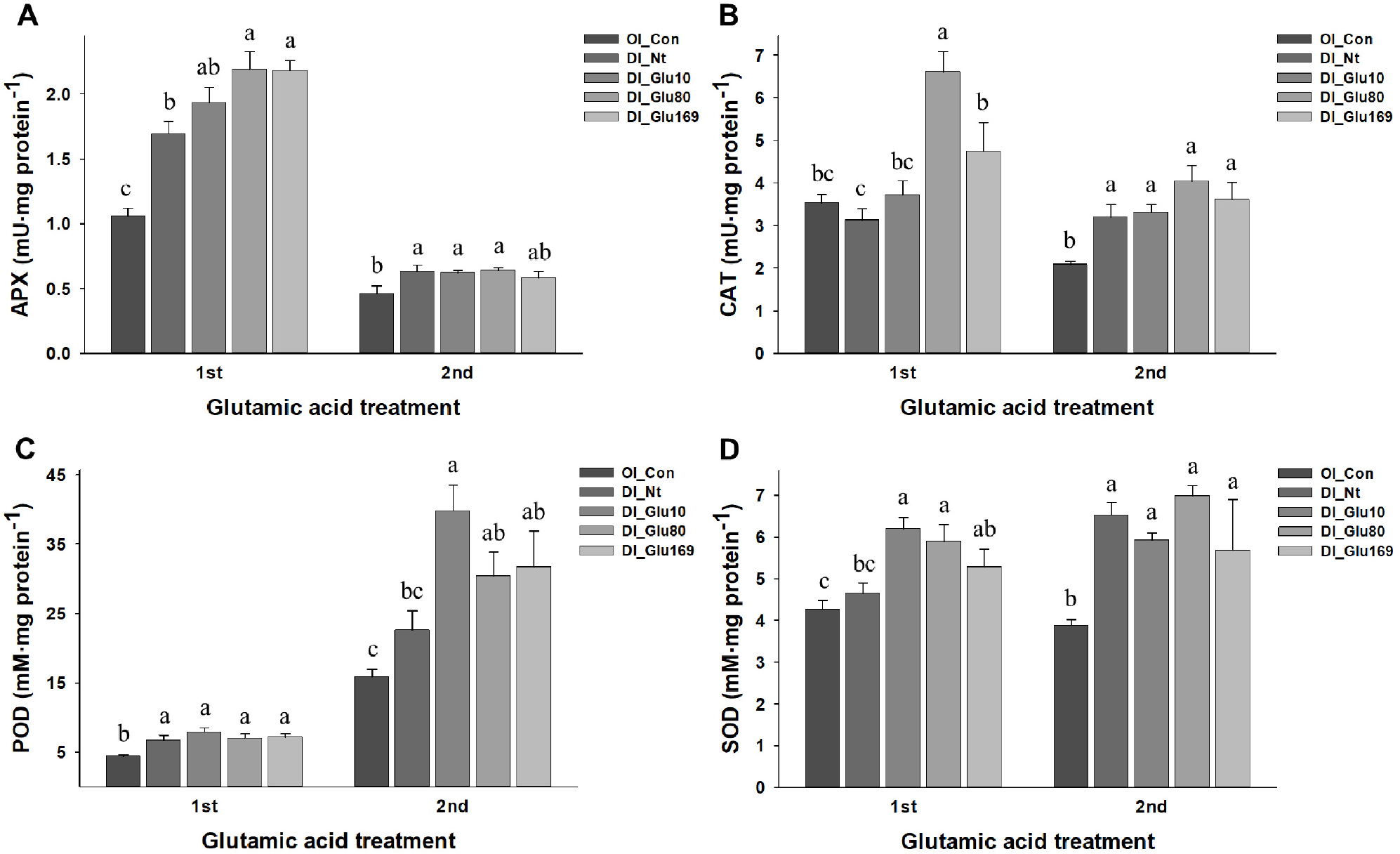
건조 스트레스 조건에서 글루탐산 엽면살포시 마늘의 항산화 효소 활성 변화를 측정하였다(Fig. 3). 건조 스트레스 조건에서 글루탐산 처리시 마늘의 항산화 효소 활성이 전반적으로 증가하였다. APX 활성은 글루탐산 1회 처리시 무처리 대비 14-30% 증가하였고, Glu 80mg·L-1과 Glu 169mg·L-1 처리가 현저하게 높았으나, 반면 2회차에서는 각 처리 간 차이를 보이지 않았다(Fig. 3A). CAT와 SOD 활성은 글루탐산 1회 처리에서 Glu80이 유의한 차이를 보이며 높았다(Fig. 3B-C). 반면 POD 활성은 2회차에서 Glu 10mg·L-1 처리가 가장 높았다(Fig. 3D). 전체적인 항산화 효소 활성은 Glu80 처리가 전체적으로 가장 높았다. 토양 수분 부족으로 인한 광합성 능력의 저하는 작물의 ROS의 생성을 증가시켜 산화스트레스를 유발하는데 이는 세포의 DNA, RNA, 단백질의 손상을 유발한다(Gill과 Tureja, 2010). 이러한 ROS에 의한 손상으로부터 작물을 보호하기 위하여 다양한 항산화 효소 활성이 증가하여 스트레스에 저항한다고 알려져 있다(Jan 등, 2019). 글루탐산의 경우 건조 스트레스 조건에서 배추(Haghighi 등, 2020)와 상추(Franzoni 등, 2021; Highighi, 2012)등의 작물에서 항산화 효소 활성의 증가가 보고되었는데, 본 실험에서 건조 스트레스 조건의 마늘에 글루탐산 처리시 항산화 효소 활성이 전반적으로 증가하였다(Fig. 3). 건조 스트레스 조건에서 마늘의 글루탐산 처리시 각 항산화 효소에 따라 다른 반응을 보여주고 있으며, 글루탐산 1회 처리시 효소활성이 증가하였으나 2회 처리에서는 감소하는 경향을 보였다(Fig. 3). 이는 항산화 효소 마다 각각의 기질 특이성, 작용 위치, 대사 연관성과 같은 반응 메커니즘에 따라 상이한 반응 양상을 보이는데, APX와 CAT, 및 SOD는 스트레스 초기에 증가하나, 시간이 더 경과하거나 스트레스가 심할 경우 활성이 감소하였고, POD는 시간이 경과함에 따라 증가한다는 연구 보고와 유사하였다(Jerčić 등, 2023; Kovaˇcevi´c 등, 2023; Zhou 등, 2023). 또한 장기적인 건조 스트레스는 과도한 ROS 축적에 따른 효소 단백질의 산화적 손상과 광합성 감소, 탄수화물 축적 감소, NADPH 생성 저하, 항산화 효소가 필요로 하는 금속 이온(Cu, Zn, Mn 등)의 공급 제한 등의 원인에 의해 감소한다고 보고되었다(Haghpanah, 2024; Laxa 등, 2019; Xu 등, 2020). 이와 반대로 POD는 세포외부에서 작용하고, 세포벽 강화, 페놀화합물 산화, 리그닌 생합성 등에 관여하며, H2O2와 페놀화합물을 기질로 사용하기 때문에 다른 항산화 효소 보다 늦은 활성을 보이는 것으로 알려졌다(Almagro 등, 2009; Hiraga 등, 2001; Mittler 등, 2004). 이러한 연구 결과를 통해 건조 스트레스 조건에서 글루탐산 처리는 항산화 효소 활성 변화를 통해서 산화스트레스를 완화시키는 것으로 사료된다.
https://cdn.apub.kr/journalsite/sites/phpf/2025-034-04/N0090340417/images/phpf_34_04_17_F3.jpg
Fig. 3.

Changes in ascorbate peroxidase (APX, A), catalase (CAT, B), peroxidase (POD, C), and superoxide dismutase (SOD, D) activity levels in garlic as affected by treatment with different concentrations of glutamic acid (Glu) at 3 days after foliar application twice at 7-day intervals(1st, 2nd) under drought condition. Vertical bars represent standard errors of the mean from nine replications. Different letters indicate significant differences determined by LSD (p < 0.05). Abbreviations: Con, control; Nt, no-treatnent; OI, optimal irrigation; DI, deficient irrigation.

3. 마늘의 MDA 및 근활력 변화

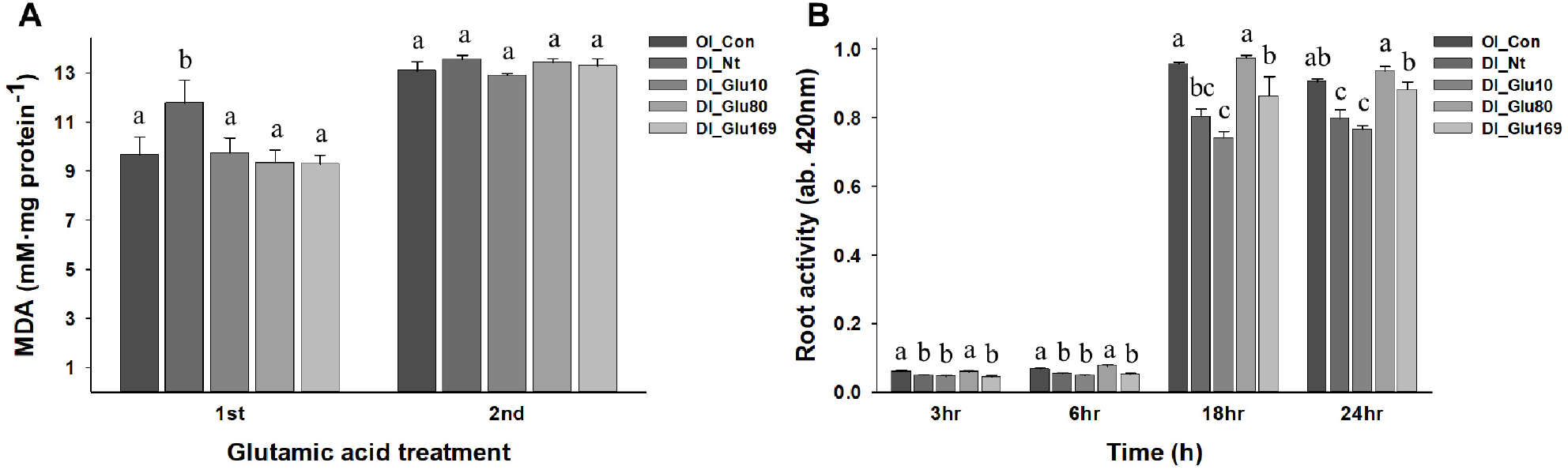
ROS 축적에 의한 배추의 피해 정도를 확인하기 위해 lipid peroxidation을 분석하였다(Fig. 4A). Lipid peroxidation은 과산화지질과 알데하이드의 생성 및 막 인지질의 파괴로 인한 세포 손상으로, 이 과정의 분해 산물인 MDA의 함량으로 피해 정도를 측정할 수 있다(Farmer와 Mueller, 2013). 건조 스트레스 조건에서 마늘의 MDA 함량은 대조구 대비 증가하였는데, 이는 건조 처리로 인한 세포막의 손상을 나타낸다. 글루탐산 처리시 마늘의 MDA 함량이 무처리 대비 유의한 차이를 보이며 감소하였다. 반면에 2회 살포 후에는 처리 간 차이를 보이지 않았다(Fig. 4A). 건조 스트레스는 마늘과 양파의 세포내 ROS를 생성하고 이로 인해 Lipid peroxidation에 의한 세포손상으로 MDA의 함량을 증가시키며(Thangasamy 등, 2018), 건조 스트레스에 많이 노출될수록 지질 과산화의 정도가 증가하는 것으로 보고되었다(Anjum 등, 2011; Kovaˇcevi´c 등, 2023). 반면 글루탐산 처리시 항산화 효소 활성의 증가를 통해 지질 과산화가 낮아지고 MDA 함량이 감소하면서 산화스트레스를 완화한다는 연구가 보고되었다(Lee 등, 2021; Ma 등, 2022; Xu 등, 2020), 본 연구에서도 마늘의 MDA 함량 감소를 확인하였으며, 글루탐산이 건조 스트레스에 의한 세포 손상을 효과적으로 완화시키는 것으로 사료된다. 근활력 측정 결과 건조 스트레스 조건에서 글루탐산 처리시 근활력이 유의한 차이를 보이며 증가하였으며, 반응 후 18시간 후 가장 높은 활성을 보였고, 대조구와 차이가 없었다(Fig. 2B). 이를 통해 글루탐산의 처리가 마늘의 근활력에 긍정적인 영향을 준다는 것을 확인하였다.
https://cdn.apub.kr/journalsite/sites/phpf/2025-034-04/N0090340417/images/phpf_34_04_17_F4.jpg
Fig. 4.

Changes in malondialdehyde (MDA, A) contents and root activity (B) in garlic as affected by treatment with different concentrations of glutamic acid (Glu) at 3 days after foliar application twice at 7-day intervals(1st, 2nd) under drought condition. Vertical bars represent standard errors of the mean from nine replications. Different letters indicate significant differences determined by LSD (p < 0.05).
Abbreviations: Con, control; Nt, no-treatnent; OI, optimal irrigation; DI, deficient irrigation.

4. 생육 특성 변화

마늘 구의 특성을 조사한 결과는 Table 1과 같다. 마늘의 건조 스트레스 처리시 생육 특성이 대조구 대비 감소하였다. 반면에 글루탐산 처리시 Glu 80mg·L-1 처리는 구고 36.2mm, 구중 11.1g으로 유의하게 증가하였으나 이외의 구폭, 건구중 및 인편수는 처리 간 차이를 보이지 않았다. 마늘은 뿌리의 양이 적고 얕게 분포해 있어 토양수분 관리는 마늘의 수량에 영향을 주는 매우 중요한 요소이다(Brewster와 Rabinowitch, 1990). 수분 부족에 따른 마늘 외부의 수분 포텐셜이 낮아지면 세포의 생장은 현저하게 낮아지고 줄기와 뿌리 생장 지연으로 수량 감소를 초래한다(Jon과 Christopher, 1998). 이전 연구에서 양파, 마늘 등에 글루탐산 처리시 전반적인 생육이 전반적으로 증가한다고 보고 되었는데(Shafeek 등, 2012; Turfan, 2021; Turfan과 Turan, 2023), 본 연구에서는 건조 스트레스 조건에서 마늘의 Glu80 처리시 구중과 구고만 증가하였다(Table 1.).

Table 1.

Effects of glutamic acid (Glu) treatments on growth parameters of garlic exposure to drought condition.

Irrigation treatmentz Foliar application Bulb height
(mm)
Bulb diameter
(mm)
Bulb fresh weight
(g)
Bulb dry weight
(g)
Clove no.
OI H2O 40.3ay 28.6a 13.3a 3.26a 6.4a
DI H2O 33.6cd 24.8b 8.5c 2.26b 5.6a
Glu 10mg·L-1 32.6d 24.4b 9.4bc 2.34b 5.8a
Glu 80mg·L-1 36.2b 26.6ab 11.1ab 2.92ab 5.8a
Glu 169mg·L-1 35.9bc 27.0ab 10.9abc 2.87ab 6.4a

zOI, optimal irrigation; DI, deficient irrigation.

yDifferent letters indicate significant differences determined by LSD (p < 0.05).

따라서 건조 스트레스 조건에서 글루탐산의 경엽처리는 마늘의 광합성 특성 향상과 항산화 효소 활성의 증가를 통해 산화스트레스를 효과적으로 완화하였고, 글루탐산 80mg·L-1 처리시 마늘의 구중이 증가하였으나, 글루탐산의 마늘 수량 증가에 대한 추가적인 연구가 필요하다고 판단된다.


Acknowledgements

본 연구는 농촌진흥청 연구사업(과제번호: RS-2020-RD009367) 및 농촌진흥청 국립원예특작과학원 전문연구원 과정의 지원을 받았습니다.

References

1

Abdelaal K., K.A. Attia, G. Niedbała, T. Wojciechowski, Y. Hafez, S. Alamery, T.K. Alateeq, and S.A. Arafa 2021, Mitigation of drought damages by exogenous chitosan and yeast extract with modulating the photosynthetic pigments, antioxidant defense system and improving the productivity of garlic plants. Horticulturae 7:510. doi:10.3390/horticulturae7110510

10.3390/horticulturae7110510
2

Aghaye Noroozlo Y., M.K. Souri, and M. Delshad 2019, Stimulation effects of foliar applied glycine and glutamine amino acids on lettuce growth. Open Agriculture 4:164-172. doi:10.1515/opag-2019-0016

10.1515/opag-2019-0016
3

Almagro L., L.V. Gómez Ros, S. Belchi-Navarro, R. Bru, A. Ros Barceló, and M.A. Pedreño 2009, Class III peroxidases in plant defence reactions. Journal of Experimental Botany 60:377-390. doi:10.1093/jxb/ern277

10.1093/jxb/ern277
4

Anjum S.A., X. Xie, L.C. Wang, M.F. Saleem, C. Man, and W. Lei 2011, Morphological, physiological and biochemical responses of plants to drought stress. African J Agric Res 6:2026-2032. doi:10.5897/AJAR10.027

10.5897/AJAR10.027
5

Baker N.R. 2008, Chlorophyll fluorescence: A probe of photosynthesis in vivo. Annual Review of Plant Biology 59:89-113. doi:10.1146/annurev.arplant.59.032607.092759

10.1146/annurev.arplant.59.032607.092759
6

Beale S.I., S.P. Gough, and S. Granick 1975, Biosynthesis of delta-aminolevulinic acid from the intact carbon skeleton of glutamic acid in greening barley. Proc Natl Acad Sci 72: 2719-2723. doi:10.1073/pnas.72.7.2719

10.1073/pnas.72.7.27191058487PMC432842
7

Bradford M.M. 1976, A rapid and sensitive method for the quantitation of microgram quantities of protein utilizing the principle of protein-dye binding. Anal Biochem 72:248-254. doi:10.1006/abio.1976.9999

10.1006/abio.1976.9999
8

Cao Y.P., Z.K. Gao, J.T. Li, G.H. Xu, and M. Wang 2010, Effects of extraneous glutamic acid on nitrate contents and quality of chinese chive. Acta Hortic 856:91-98. doi:10.17660/ActaHortic.2010.856.11

10.17660/ActaHortic.2010.856.11
9

Chung Y.S., K.S. Kim, M. Hamayun, and Y. Kim 2020, Silicon confers soybean resistance to salinity stress through the regulation of reactive oxygen species and reactive nitrogen species. Frontier Plant Science 10:1-11. doi:10.3389/fpls.2019.01725

10.3389/fpls.2019.0172532117330PMC7031409
10

Dietz K.J. 2021, Drought and crop yield. Plant Biology 23:881-893. doi:10.1111/plb.13304

10.1111/plb.13304
11

Dinu C.A., D. Moraru, and N.L. Paraschiv 2011, The physiology of glutamic acid. Agro. Series Sci. Res. Lucrari Stiintifice Seria Agronomie 54:53-55. https://www.uaiasi.ro/revagrois/PDF/2011-2/paper/pagini_53-55_Dinu.pdf

12

Farmer E.E., and M.J. Mueller 2013, ROS-mediated lipid peroxidation and RES-activated signaling. Annu Rev Plant Biol 64:429-450. doi:10.1146/annurev-arplant-050312-120132

10.1146/annurev-arplant-050312-120132
13

Farooq M., A. Wahid, N. Kobayashi, D. Fujita, and S.M.A. Basra 2009, Plant drought stress: Effects, mechanisms and management. Agron Sustain Dev 29:185-212. doi:10.1051/agro:2008021

10.1051/agro:2008021
14

Flexas J., M. Ribas-Carbo, A. Diaz-Espejo, J. Galmes, and H. Medrano 2008, Mesophyll conductance to CO₂: current knowledge and future prospects. Plant Cell & Environment 31:602-621. doi:10.1111/j.1365-3040.2007.01757.x

10.1111/j.1365-3040.2007.01757.x
15

Franzoni G., G. Cocetta, and A. Ferrrante 2021, Effect of glutamic acid foliar applications on lettuce under water stress. Physiol Mol Biol Plants 27:1059-1072. doi:10.1007/s12298-021-00984-6

10.1007/s12298-021-00984-634103849PMC8140180
16

Gill S.S., and N. Tuteja 2010, Reactive oxygen species and antioxidant machinery in abiotic stress tolerance in crop plants. Plant Physiol Biochem 48:909-930. doi:10.1016/j.plaphy.2010.08.016

10.1016/j.plaphy.2010.08.016
17

Habuš Jerˇci´c I., A. Bošnjak Mihovilovi´c, A. Matkovi´c Stankovi´c, B. Lazarevi´c, S. Goreta Ban, D. Ban, N. Major, I. Tomaz, Z. Banjavˇci´c, and S. Kereša 2023, Garlic ecotypes utilise different morphological, physiological and biochemical mechanisms to cope with drought Stress. Plants 12:1824. doi:10.3390/plants12091824

10.3390/plants1209182437176881PMC10180593
18

Haghighi M. 2012, The effect of humic and glutamic acids in nutrient solution on the N metabolism in lettuce. J Sci Food Agric 92:3023-3028. doi:10.1002/jsfa.5718

10.1002/jsfa.5718
19

Haghpanah M., S. Hashemipetroudi, A. Arzani, and F. Araniti 2024, Drought tolerance in plants: Physiological and Molecular Responses. Plants 13:2962. doi:10.3390/plants13212962

10.3390/plants1321296239519881PMC11548289
20

Hasanuzzaman M., M.B. Bhuyan, F. Zulfiqar, A. Raza, S.M. Mohsin, J.A. Mahmud, M. Fujita, and V. Fotopoulos 2020, Review: Reactive oxygen species and antioxidant defense in plants under abiotic stress: Revisiting the crucial role of a universal defense regulator. Antioxidants MDPI 9:1-52. https://www.mdpi.com/2076-3921/9/8/681

10.3390/antiox908068132751256PMC7465626
21

Hiraga S., K. Sasaki, H. Ito, Y. Ohashi, and H. Matsui 2001, A large family of class III plant peroxidases. Plant Cell Physiol 42:462-468. doi:10.1093/pcp/pce061

10.1093/pcp/pce061
22

Hussain H., S. Men, S. Hussain, Y. Chen, S. Ali, S. Zhang, K. Zhang, Y. Li, Q. Xu, C. Liao, and L. Wang 2019, Interactive effect of drought and heat stress on morphological attributes, yield, nutrient uptake and oxidative status in Maize hybrids. Scientific Reports 9:1-12. doi:10.1038/s41598-019-40362-7

10.1038/s41598-019-40362-730846745PMC6405865
23

Hussen M.M., S. Lobna, L. Taha, A.E. Rawia, and M.M.I. Soad 2013, Responses of photosynthetic pigments and amino acids content of moringa plants to salicylic acid and salinity. J Appl Sci Res 9:4889-4895. http://www.aensiweb.com/old/jasr/jasr/2013/4889-4895.pdf

24

Jan S., N. Abbas, M. Ashraf, and P. Ahmad 2019, Roles of potential plant hormones and transcription factors in controlling leaf senescence and drought tolerance. Protoplasma 256: 313-329. doi:10.1007/s00709-018-1310-5

10.1007/s00709-018-1310-5
25

Jerčić I.H., T.K. Kovačević, M. Galić, and Z. Lončarić 2023, Garlic ecotypes utilise different morphological and physiological traits to cope with drought stress. Plants 12:1861. doi:10.3390/plants12091824

10.3390/plants1209182437176881PMC10180593
26

Kaiser W.M. 1987, Effects of water deficit on photosynthetic capacity. Physiol Plant 71:142-149. doi:10.1111/j.1399-3054.1987.tb04631.x

10.1111/j.1399-3054.1987.tb04631.x
27

Kan C.C., T.Y. Chung, H.Y. Wu, Y.A. Juo, and M.H. Hsieh 2017, Exogenous glutamate rapidly induces the expression of genes involved in metabolism and defense responses in rice roots. BMC Genom 18:186. doi:10.1186/s12864-017-3588-7

10.1186/s12864-017-3588-728212609PMC5316172
28

Kaur G., and B. Asthir 2017, Molecular responses to drought stress in plants. Biol Plant 61:201-209. doi:10.1007/s10535-016-0700-9

10.1007/s10535-016-0700-9
29

Kaur H., M. Manna, T. Thakur, V. Gautam, and P. Salvi 2021, Imperative role of sugar signaling and transport during drought stress responses in plants. Physiol Plant 171:833-848. doi:10.1111/ppl.13364

10.1111/ppl.13364
30

Kong D., C. Ju, A. Parihar, S. Kim, D. Cho, and J.M. Kwak 2015, Arabidopsis glutamate receptor homolog3. 5 modulates cytosolic Ca2+ level to counteract effect of abscisic acid in seed germination. Plant Physiol 167:1630-1642. doi:10.1104/pp.114.251298

10.1104/pp.114.25129825681329PMC4378146
31

Korean Statistical Information Service (KOSIS) 2024, Vegetable production (green vegetables) 1980-2024. (in Korean)

32

Kovaˇcevi´c T.K., N. Iši´c, N. Major, M. Krpan, D. Ban, M. Frani´c, and S. Goreta Ban 2023, The Interplay of physiological and biochemical response to short-term drought exposure in garlic (Allium sativum L.). Plants 12:3215. doi:10.3390/plants12183215 .3390/plants12183215

10.3390/plants1218321537765378PMC10536737
33

Laxa M., M. Liebthal, W. Telman, K. Chibani, and K.J. Dietz 2019, The role of the plant antioxidant system in drought tolerance. Antioxidants 8:94. doi:10.3390/antiox8040094

10.3390/antiox804009430965652PMC6523806
34

Lee H.J., J.S. Kim, S.G. Lee, S.K. Kim, B.H. Mun, and C.S. Choi 2017, Glutamic acid foliar application enhances antioxidant enzyme activities in kimchi cabbages leaves treated with low air temperature. Hortic Sci Technol 35:700-706. (in Korean) doi:10.12972/kjhst.20170074

10.12972/kjhst.20170074
35

Lee H.J., J.H. Lee, S.H. Wi, W.Y. Jang, S.W. An, C.K. Choi, and S.H. Jang 2021, Exogenously applied glutamic acid confers improved yield through increased photosynthesis efficiency and antioxidant defense system under chilling stress condition in Solanum lycopersicum L. cv. Dotaerang Dia. Scientia Horticulturae v277. doi:10.1016/j.scienta.2020.109817

10.1016/j.scienta.2020.109817
36

Lee J.H., H.J. Lee, S.H. Wi, I.H. Yu, K.H. Yeo, S.W. An, Y.A. Jang, and S.H. Jang 2021, Enhancement of growth and antioxidant enzyme activities on kimchi cabbage by melatonin foliar application under high temperature and drought stress conditions. Hortic Sci Technol 39:583-592. (in Korean) doi:10.7235/HORT.20210052

10.7235/HORT.20210052
37

Lee S.K., H.J. Lee, S.K. Kim, J.S. Choi, and S.T. Park 2016, Influence of waterlogging period on the growth, physiological responses, and yield of kimchi cabbage. J environ sci inter 25:535-542. (in Korean) doi:10.5322/JESI.2016.25.4.535

10.5322/JESI.2016.25.4.535
38

Lei P., X. Pang, X. Feng, S. Li, B. Chi, R. Wang, and H. Xu 2017, The microbe-secreted isopeptide poly-γ-glutamic acid induces stress tolerance in Brassica napus L. Seedlings by activating crosstalk between H2O2 and Ca2+. Sci Rep 7:41618. doi:10.1038/srep41618

10.1038/srep4161828198821PMC5304171
39

Lv D.G., C. Yu, L. Yang, S.J. Qin, H.Y. Ma, G.D. Du, G.C. Liu, and S. Khanizadeh 2009, Effects of foliar-applied L-glutamic acid on the diurnal variations of leaf gas exchange and chlorophyll fluorescence parameters in hawthorn (Crataegus pinnatifida Bge.). Europ J Hort Sci 74:204-209. https://wwwjstor.org/stable/24126831

10.1079/ejhs.2009/1182843
40

Ma H., P. Li, X. Liu, C. Li, S. Zhang, X. Wang, and X. Tao 2022, Poly-γ-glutamic acid enhanced the drought resistance of maize by improving photosynthesis and affecting the rhizosphere microbial community. BMC Plant Biol 22:11. doi:10.1186/s12870-021-03392-w

10.1186/s12870-021-03392-w34979944PMC8722152
41

Manzoor H., J. Kelloniemi, A. Chiltz, D. Wendehenne, A. Pugin, B. Poinssot, and A. Garcia‐Brugger 2013, Involvement of the glutamate receptor AtGLR 3.3 in plant defense signaling and resistance to H yaloperonospora arabidopsidis. Plant J 76:466-480. doi:10.1111/tpj.12311

10.1111/tpj.12311
42

Medrano H., J.M. Escalona, J. Bota, J. Gulias, and J. Flexas 2002, Regulation of photosynthesis of C3 plants in response to progressive drought: Stomatal conductance as a reference parameter. Ann Bot 89:895-905. doi:10.1093/aob/mcf079

10.1093/aob/mcf07912102515PMC4233802
43

Mittler R., S. Vanderauwera, M. Gollery, and F. Van Breusegem 2004, Reactive oxygen gene network of plants. Trends Plant Sci 9:490-498. doi:10.1016/j.tplants.2004.08.009

10.1016/j.tplants.2004.08.009
44

Oguz M.C., M. Aycan, E. Oguz, I. Poyraz, and M. Yildiz 2022, Drought stress tolerance in plants: Interplay of molecular, biochemical and physiological responses in important development stages. Physiologia 2:180-197. doi:10.3390/physiologia2040015

10.3390/physiologia2040015
45

Okumoto S., D. Funck, M. Trovato, and G. Forlani 2016, Amino acids of the glutamate family: functions beyond primary metabolism Front. Plant Sci 7. doi:10.3389/fpls.2016.00318

10.3389/fpls.2016.0031827047503PMC4800189
46

Osakabe Y., K. Osakabe, K. Shinozaki, and L.S.P. Tran 2014, Response of plants to water stress. Front Plant Sci 5:86. doi:10.3389/fpls.2014.00086

10.3389/fpls.2014.0008624659993PMC3952189
47

Qi J., S. Sun, L. Wang, J. Zhao, and W. Zhang 2020, Roles of glutamate receptor-like channels (GLRs) in plant growth and response to environmental stimuli. Int J Mol Sci 21:275. doi:10.3390/ijms21010275

10.3390/ijms2101027531906113PMC6981567
48

Qiao M., L. Yin, and D. Chen 2024, Impacts of drought on photosynthesis in major food crops and the related mechanisms of plant responses to drought. Plants 13:4383. doi:10.3390/plants13131808

10.3390/plants1313180838999648PMC11243883
49

Qiu X.M., Y.Y. Sun, X.Y. Ye, and Z.G. Li 2020, Signaling role of glutamate in plants. Front Plant Sci 10:1743. doi:10.3389/fpls.2019.01743

10.3389/fpls.2019.0174332063909PMC6999156
50

Sadak M.S., and M.T. Abdelhamid 2015, Influence of amino acids mixture application on some biochemical aspects, antioxidant enzymes and endogenous polyamines of Vicia faba plant grown under seawater salinity stress. Gesunde Pflanze 67:119-129. doi:10.1007/s10343-015-0344-2

10.1007/s10343-015-0344-2
51

Sánchez-Virosta A., and D. Sánchez-Gómez 2019, Inter-cultivar variability in the functional and biomass response of garlic (Allium sativum L.) to water availability. Sci Hortic 252: 243-251. http://dx.doi.org/10.1016/j.scienta.2019.03.043

10.1016/j.scienta.2019.03.043
52

Sattar A., A. Sher, M. Ijaz, S. Ul- Allah, M. Butt, M. Irfan, M.S. Rizwan, H. Ali, and M.A. Cheema 2020, Interactive effect of biochar and silicon on improving morpho-physiological and biochemical attributes of maize by reducing Drought hazards. J Soil Sci Plant Nutr 20:1819-1826. https://link.springer.com/article/10.1007/s42729-020-00253-7

10.1007/s42729-020-00253-7
53

Seleiman M.F., N. Al-Suhaibani, N. Ali, M. Kmal, M. Alotaibi, Y. Refay, T. Dindaroglu, H.H. Abdul-Wajid, and M.L. Battaglia 2021, Drought stress impacts on plants and different approaches to alleviate its adverse effects. Plants 10:259. https://www.mdpi.com/2223-7747/10/2/259

10.3390/plants1002025933525688PMC7911879
54

Shafeek M.R., Y.I. Helmy, M.A.F. Shalaby, and N.M. Omer 2012, Response of onion plants to foliar application of sources and levels of some amino acid under sandy soil conditions. J Appl Sci Res 8:5521-5527. doi:10.3390/plants10020259

10.3390/plants1002025933525688PMC7911879
55

Shalaby T.A., and H. El-Ramady 2014, Effect of foliar application of bio-stimulants on growth, yield, components, and storability of garlic (Allium sativum L.). Australian Aust J Crop Sci 8:271-275.

56

Stolarz M., and H. Dziubinska 2017, Osmotic and salt stresses modulate spontaneous and glutamate-induced action potentials and distinguish between growth and circumnutation in Helianthus annuus seedlings. Front Plant Sci 8:1766. doi:10.3389/fpls.2017.01766

10.3389/fpls.2017.0176629093722PMC5651625
57

Thangasamy A., and Y. Khade 2018, Physiological and biochemical responses in onion crop to drought stress integrated water and nutrient management and physiological manipulation for improving productivity of onion and garlic view project okra breeing view project Pranjali Harischandra Gho. Artic Int J Curr Microbiol Appl Sci 7:2054-2062. doi:10.20546/ijcmas.2018.701.247

10.20546/ijcmas.2018.701.247
58

Turfan N. 2021, Effect of different organic manures application on the bioactive compound and yield of Taşköprü garlic (Allium sativum L.) under 50% drought. International Journal of Agriculture and Wildlife Science 7:264-275. doi:10.24180/ijaws.872632

10.24180/ijaws.872632
59

Turfan N., and B. Turan 2023, Effects of glutamic acid applications on the yield and growth parameters in garlic (Allium sativum L.) cultivation. Harran Tarım ve Gıda Bilimleri Dergisi 27:1-14. doi:10.29050/harranziraat.1176239

10.29050/harranziraat.1176239
60

Xu Z., J. Ma, P. Lei, Q. Wang, X. Feng, and H. Xu 2020, Poly-γ-glutamic acid induces system tolerance to drought stress by promoting abscisic acid accumulation in Brassica napus L.. Sci Rep 10:252. doi:10.1038/s41598-019-57190-4

10.1038/s41598-019-57190-431937837PMC6959327
61

Yu B., N. Liu, S. Tang, T. Qin, and J. Huang 2022, Roles of Glutamate Receptor-Like Channels (GLRs) in Plant Growth and Response to Environmental Stimuli. Plants 11:3450. doi:10.3390/plants11243450

10.3390/plants1124345036559561PMC9782139
62

Zhou Y., L. Sun, and D. Wang 2023, Screening and verification of aquaporin gene AsPIP1-3 in garlic (Allium sativum L.) under salt and drought stress. J Integr Agric 22:5841595. doi:10.1016/S2095-3119(22)00392-1

10.1016/S2095-3119(22)00392-1
페이지 상단으로 이동하기